
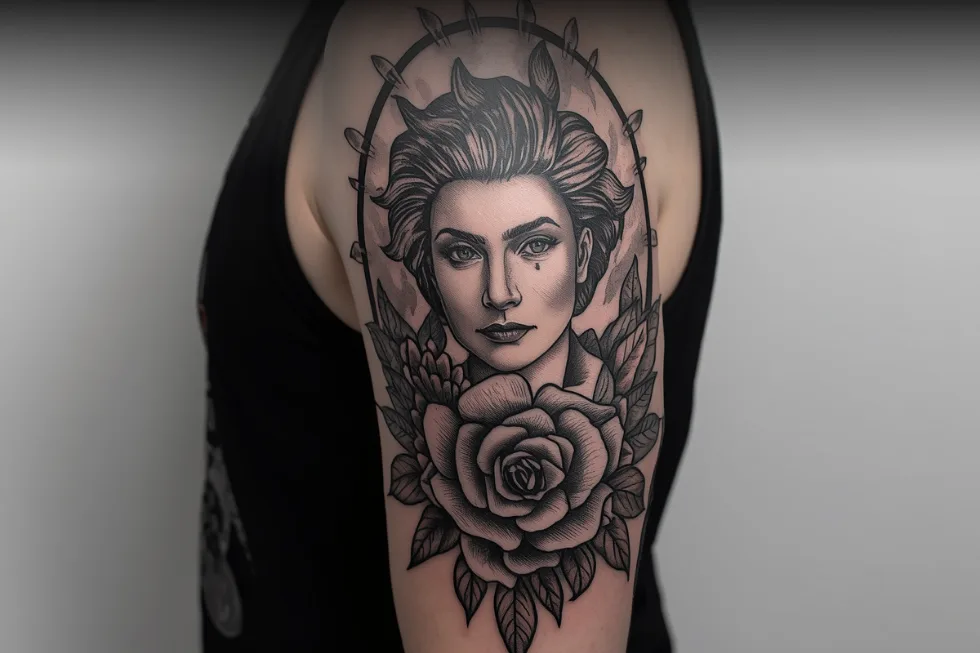
If you’ve been thinking about a sleeve tattoo for a while now, you’re in good company. A record one in four Australians now has at least one tattoo, up from just 19% in 2016, according to McCrindle Research. And more of those people are going bigger, going bolder, and committing to full arm sleeves.
But a sleeve tattoo is not something you just walk in and get done in one session. It’s a project. A big one. Done right, it becomes a cohesive masterpiece that flows beautifully from your wrist to your shoulder. Done without a plan, it can end up a collection of disconnected pieces that never really work together.
So before you book anything, here’s what Adelaide clients need to understand first
Full Sleeve vs Half Sleeve: What’s the Difference and Which Should You Choose?
This is usually the first question a tattoo artist will ask you during a consultation, and it matters more than most beginners realise.
What Each Option Covers
| Type | Coverage | Typical Sessions | Timeline |
| Half sleeve | Shoulder to elbow (upper arm) OR elbow to wrist (forearm) | 3 to 7 sessions | 6 to 10 months |
| Full sleeve | Shoulder all the way to the wrist | 8 to 15 sessions | 12 to 18 months |
| Arm sleeve | Entire arm including shoulder cap | Varies by detail | 12 to 24 months |
A half sleeve is a good entry point if you’re not quite ready to commit to the full arm. You can start with the outer forearm or the upper arm, then extend later. Most people opt for the outer forearm first because it’s less painful and easier to show off.
A full sleeve covers everything from the shoulder cap down to the wrist, wrapping around the inner bicep, elbow, inner forearm, and wrist. Every part of the arm becomes part of the canvas.
Things to Think About Before You Decide
- Concealment needs: If you work in a professional environment and need to cover your ink, a half sleeve that stops at the elbow is much easier to hide under a shirt. A full sleeve reaching the wrist is hard to conceal.
- Pain tolerance: The inner bicep, elbow ditch, and wrist are notoriously painful areas. A half sleeve lets you test how your body handles those spots before committing to the full arm.
- Budget and tattoo pricing: A full sleeve is one of the biggest tattoo investments you’ll make. Spreading it across sessions helps manage cost over time, but plan for a significant outlay across the full timeline.
- Your body as a canvas: Think about how the design will wrap around the anatomy of your arm, including the curves of the bicep, the flatness of the outer forearm, and the tighter space around the elbow.
There’s no wrong answer. Some of the best tattoo work in Adelaide starts as a half sleeve and grows over time. Others go sleeve from start to finish with a full plan mapped out from day one.
Planning a Cohesive Design: How to Make It All Work Together
This is where most people need the most help, and honestly, it’s where a great tattoo artist earns their keep.
A cohesive sleeve doesn’t just mean using the same colours or theme throughout. It means the design flows naturally across the entire arm, so every element leads into the next. Sleeve flows from the shoulder anchor piece down through the mid-sleeve and into the forearm and wrist, using thoughtful composition and transition elements to tie everything together.
Design Styles to Consider
- Black and grey realism: A timeless choice, works especially well for portraits, wildlife, and detailed nature scenes. The grey tones allow the artist to create depth and dimension that colour sometimes can’t match.
- Colour work: Bold colour sleeves tend to feature Japanese-style imagery like koi fish, dragons, peonies, and waves, or neo-traditional elements with rose motifs and illustrative shading. Colour needs more aftercare attention and touch-ups over time, especially in Australia’s UV-heavy climate.
- Blackwork and geometric: Clean lines, patterns, and geometric compositions are great for clients who want something bold but don’t want the long-term maintenance of colour ink.
- Patchwork style: A growing aesthetic where individual tattoo pieces are placed with intentional spacing across the arm, eventually connected with filler elements.
How Design Elements Work Together
A sleeve needs anchor pieces and filler to work:
- Anchor pieces are the main focal points, usually a larger tattoo on the outer forearm, upper arm, or shoulder cap. A dragon, a portrait, a detailed rose, or a traditional Japanese scene all make strong anchors.
- Filler elements are what tie it all together. Without thoughtful filler, a sleeve can look like a random collection. Good filler includes clouds, waves, botanical elements, dotwork, geometric patterns, or negative space designs that transition between the bigger pieces.
- Composition matters a lot. A good tattoo artist will think about how each piece sits on the arm’s anatomy, where the elbow interrupts the flow, and how the wrist design wraps cleanly.
- Cohesive colour palette: Even if you mix styles slightly, keeping a consistent colour palette (warm tones, cool tones, or committing fully to black and grey) gives the sleeve a unified feel.
If you’re planning your sleeve, bring reference images. Bring multiple. Your artist at a studio like Art n Soul in Prospect will work with those references to envision something that suits your body and your style, without just copying someone else’s work.
How Many Sessions Should You Expect?
This is probably the most common question, and the honest answer is: more than you think.
Most full sleeves require 15 to 25 hours of tattooing time, though highly detailed work can easily extend beyond that. Sleeves are typically completed over 3 to 10 sessions, each lasting three to five hours, and the entire process from first session to fully healed often takes around six months to over a year.
For a half sleeve, you’re generally looking at fewer sessions across a shorter timeline, but that still means multiple bookings spread over several months.
Why You Can’t Rush It
Skin needs 2 to 4 weeks between sessions to fully heal before the next round of work. Attempting sessions too close together risks blowouts, poor ink retention, and infection.
Large tattoos like full sleeves may take up to 6 weeks to fully heal on the surface, and certain colours like red and yellow are more prone to fading than black and blue, especially with Australia’s high UV index.
Here’s a rough session breakdown to help you plan your timeline:
| Sleeve Type | Hours of Work | Estimated Sessions | Typical Timeline |
| Half sleeve (upper arm) | 6 to 12 hrs | 3 to 5 sessions | 5 to 8 months |
| Half sleeve (forearm) | 5 to 10 hrs | 3 to 4 sessions | 4 to 7 months |
| Full sleeve | 15 to 25+ hrs | 8 to 15 sessions | 12 to 18 months |
The third session is often when clients start seeing the sleeve really come together, and also when they start to feel the commitment of the process. That’s totally normal.
What Happens During a Typical Session
- Your artist reviews the plan and maps out what gets done that day
- Linework or shading is completed on the chosen section
- You heal that section properly before the next booking
- Subsequent sessions build on what’s already there, adding colour, detail, and filler as the sleeve progresses
Aftercare Through the Sleeve Journey
Because you’re healing multiple sessions over many months, aftercare becomes a real habit rather than a one-time thing. After each session:
- Keep the area clean and follow your artist’s aftercare instructions carefully
- Moisturise regularly with an unscented, quality product to support healing and longevity
- Avoid direct sun exposure and use SPF on healed work, especially important given Australia’s UV levels
- Do not pick or scratch at any scabbing during the heal phase
- Wait until the tattooed area is fully healed before going back for the next session
Good aftercare isn’t just about getting through the healing phase. It protects the quality and longevity of your sleeve for years to come. For more on this, check out Art n Soul’s guide to tattoo aftercare.
Start Your Sleeve Project with Art n Soul
If you’re ready to start planning your sleeve tattoo in Adelaide, the most important first step is a proper consultation with an experienced tattoo artist who specialises in large-scale work.
At Art n Soul, located at 230 Prospect Road, the team has been recognised among Adelaide’s top tattoo studios for seven consecutive years. Their artists work across a wide range of sleeve styles, from traditional Japanese and black and grey realism to modern colour work and geometric compositions.
What makes a sleeve project go well? Clear communication, a well-planned design, realistic expectations about sessions and healing, and a tattooist who can guide you through every step.
Here’s what to bring to your first consultation:
- Reference images (the more specific, the better)
- Notes on what styles, themes, or imagery you’re drawn to
- Any existing tattoos on the arm that need to be worked around or incorporated
- Questions about timeline, sessions, aftercare, and your specific anatomy
Whether you’re a beginner who’s just started thinking about a sleeve, or a collector who’s ready to commit to the full arm, book your consultation at Art n Soul today and let the team help you plan your sleeve properly from the very beginning.
For more reading, check out related articles on the Art n Soul blog, including their guide to choosing a trusted tattoo studio in Adelaide and why Art n Soul is Adelaide’s top studio.
FAQs: Sleeve Tattoos in Adelaide
- How long does a full sleeve tattoo take to complete?
Most full sleeves take 12 to 18 months across multiple sessions, with healing time built in between each booking.
- Is a half sleeve a good starting point for beginners?
Yes. A half sleeve on the outer forearm or upper arm is a manageable way to start, and you can always extend it into a full sleeve later.
- How painful is a sleeve tattoo?
Pain varies by area. The outer forearm and upper arm are generally less painful, while the inner bicep, elbow ditch, and wrist are more intense. Most clients find it manageable with good preparation. - Can I mix styles in one sleeve?
You can, though it works best with guidance from your artist. A skilled tattooist can weave different influences into a cohesive composition that still feels intentional.
- How do I find the right tattoo artist in Adelaide for a sleeve?
Look for an artist with a strong portfolio of large-scale work, request a consultation before committing, and choose a studio with a solid reputation for custom tattoo projects, like Art n Soul in Prospect.