
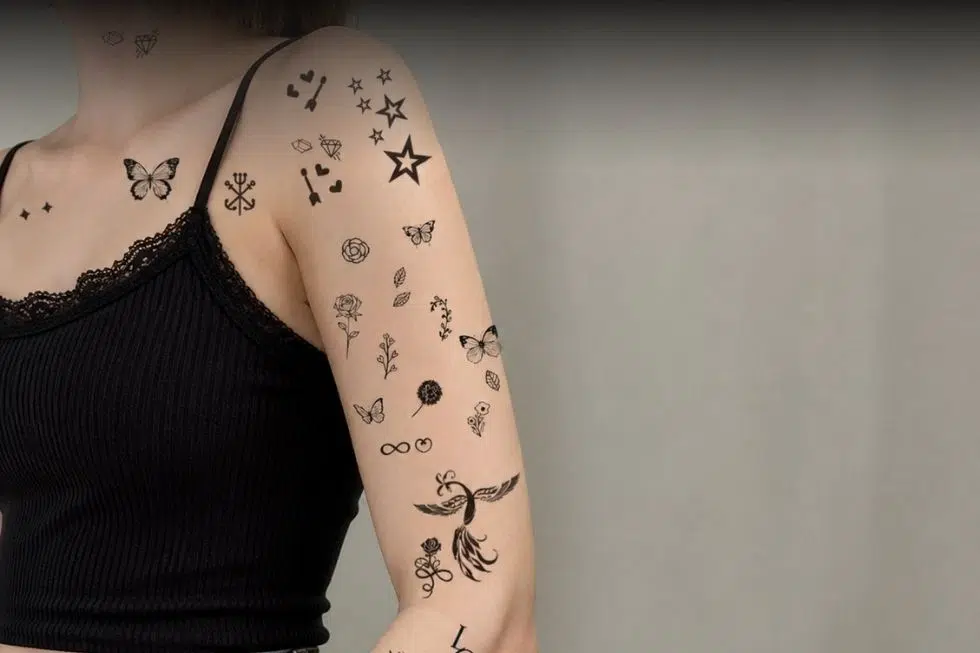
If you have been on Instagram or TikTok lately, you have probably noticed something different happening in the tattoo world. Instead of the traditional, fully planned sleeves that cover every centimetre of skin with one flowing design, people are showing off arms covered in what looks like a collection of random stickers. A small moon here. A tiny dagger there. A little frog sitting next to a floral spring. It looks effortlessly personal, almost like a visual diary worn on the skin.
That is the patchwork tattoo sleeve, and right now, it is one of the biggest things happening in Australian studios, from Melbourne all the way up to Adelaide.
What Are Sticker-Sheet and Patchwork Tattoos?
At its core, a patchwork tattoo sleeve is a collection of individual, standalone tattoos placed across the arm over time, rather than one unified design planned and executed in one go. Each piece sits on its own, separated by natural skin instead of being blended into the next. The result looks like a sheet of stickers laid out on your arm, hence the name.
Sticker sleeves have been gaining popularity, especially with younger clients, creating a kind of patchwork of self-expression as opposed to traditional full sleeve tattoos.
Unlike traditional meticulously designed sleeves that narrate a single narrative along the arm, patchwork sleeves give people the opportunity to curate an evolving collection of small tattoos that do not necessarily stick to a strict theme.
Patchwork vs Traditional Sleeves: The Key Difference
| Feature | Traditional Sleeve | Patchwork / Sticker Sleeve |
| Planning | Designed as one piece from the start | Built organically over time |
| Theme | Usually, one unified concept | Mix and match, often unrelated |
| Commitment | High upfront commitment | Lower, add piece by piece |
| Sessions | Fewer, longer sessions | Multiple shorter sessions |
| Negative space | Typically filled in | Intentionally left visible |
| Style flexibility | Usually one style | Multiple styles welcome |
Why Gen Z Is Driving the Trend
Gen Z approaches tattoos differently from previous generations. Where older clients often wanted a finished result as quickly as possible, younger people tend to see their skin as something that evolves. This trend appeals to individuals seeking tattoos that embody the dynamic nature of personal identity and ongoing experiences, enabling them to commemorate various milestones, interests, or memories over time without being restricted to a fixed trajectory.
The numbers back this up. Australia’s tattoo market was valued at AUD 37.16 million in 2024, with demand rising particularly among younger generations seeking unique expressions of identity. And across the country, from Melbourne to Adelaide, studios are reporting full books and long waitlists for patchwork-style consultations.
The Appeal: Lower Commitment, Higher Personalisation
One of the biggest reasons patchwork tattoos have taken off is that they remove the pressure of having everything figured out from day one. You do not need to walk into a studio with a fully formed vision of what your entire arm will look like in five years. You can start with one piece you love and build from there.
Here is why people are drawn to the mix-and-match tattoo style:
- You can reflect your personality accurately. A collection of different designs tells a much more layered story than one single theme ever could.
- It fits different budgets. You can add a piece when the timing is right for you financially.
- It ages with you. Your interests and tastes change. A modular tattoo design can change with them.
- There is room for spontaneity. Flash sheet tattoos and walk-in pieces fit perfectly into a patchwork build.
- Mistakes are easier to work around. If one piece is not quite right, it does not throw off the whole arm.
The idea behind this style is that it represents different parts of the person, while also being a cost-effective approach since clients can add small pieces whenever they want.
How to Plan a Patchwork Sleeve
Planning a patchwork sleeve is less about control and more about intuition. That said, there are still a few things worth thinking through before you start booking sessions.
Choosing a Loose Theme Without Forcing One
You do not need a strict theme, but having a loose visual language can help pieces feel connected rather than chaotic. Some people gravitate toward:
- Nature and botanical elements
- Dark or gothic imagery
- Cute or whimsical characters (this is big in Melbourne’s inner-city studios right now)
- Abstract or geometric forms
- Cultural symbols and personal references
The key is not to force it. If something does not feel right, do not add it just to fill space.
Picking Designs That Work Together Visually
Even in a mix-and-match tattoo style, certain things help the collection read as intentional:
- Consistent line weight: You do not need identical line weights across every piece, but wildly different line thicknesses can make the arm look unplanned in a bad way.
- Scale awareness: A tiny micro tattoo next to a large bold piece can work, but scale contrast needs to be deliberate.
- Black and grey vs colour: Mixing the two can look stunning, but think about where each sits on the arm.
Spacing, Negative Space and Composition
Here is where a lot of people get into trouble. They rush to fill every gap. Do not. Negative space is part of the design. It gives each piece room to breathe and lets the eye move across the arm naturally. A good Adelaide artist will help you think about placement before you add something new, making sure the composition stays balanced as the collection grows.
Best Tattoo Styles for Patchwork
Fine Line, Ignorant Style and Flash
Three styles dominate the patchwork world right now:
- Fine line tattoos: Delicate, detailed, and precise. Great for botanical elements, portraits, and script. Read more in our fine line tattoo guide.
- Ignorant style tattoo: Raw, deliberately imperfect linework that looks almost like a hand-drawn sketch. Hugely popular in Melbourne studios and spreading fast to Adelaide.
- Flash sheet tattoo: Pre-drawn designs offered by the artist. Quick to book, affordable, and perfect for filling gaps without overthinking.
These three sit well together because they all tend to be bold in their simplicity, even when they are stylistically very different.
Mixing Black-and-Grey With Colour Pieces
Yes, you can mix black-and-grey with colour in a patchwork sleeve. In fact, it often works really well. The trick is placement. Colour pieces tend to draw the eye first, so think about where you want visual anchors on the arm. A few bright pieces scattered through a largely black-and-grey collection can look intentional and striking.
How Many Sessions Does a Patchwork Sleeve Take?
This depends entirely on how many pieces you want, how large they are, and how often you book. That is actually one of the great things about this style. There is no deadline.
A rough guide:
- Starter phase (3 to 5 pieces): Most people begin here. A handful of pieces scattered across the arm to establish a visual language.
- Building phase (6 to 12 pieces): The collection starts to look intentional. Spacing becomes more important at this point.
- Full coverage (12+ pieces): The arm reads as a sleeve, even with visible negative space throughout.
Some people build a full patchwork sleeve over 12 to 18 months. Others take five years. There is genuinely no wrong answer. In Adelaide and Melbourne studios, clients often come back every few months to add one or two pieces, treating each session more like a ritual than a project to finish.
Cost Breakdown: Building a Sleeve Over Time vs All at Once
We are not going to throw specific dollar figures at you here because costs vary significantly between artists, studios, complexity, and size. What we can tell you is how to think about the investment:
| Approach | Pros | Cons |
| Build slowly over time | Spread the cost, more flexibility | Takes longer, more total visits |
| Block-book multiple sessions | May suit the artist’s availability | Larger upfront spend |
| Mix of flash + custom | Flash is usually more affordable | Less custom control |
The best thing to do is book a tattoo consultation with your artist and talk through a realistic roadmap. A good studio will never pressure you to do more than you are ready for.
Common Mistakes to Avoid
-
Filling Gaps Too Early
This is the number one thing artists flag. When you have three or four pieces on your arm, and you can see space, the instinct is to fill it immediately. Resist this. The space is telling you something. Wait until you find a design you genuinely love, not one you chose just to fill a gap. Forced pieces stand out in a patchwork build.
-
Mismatched Line Weights and Sizes
Fine line work next to heavy blackwork can look great, but only when the sizing is considered. A tiny, delicate piece squashed next to a large, bold one with no intentional contrast can make both pieces look worse. Talk to your artist about size and placement before committing.
A quick checklist before booking each new piece:
- Does this fit the loose visual language I have established?
- Is the size proportional to the pieces around it?
- Have I considered the negative space it will affect?
- Has my artist seen my arm and signed off on the placement?
How to Brief Your Adelaide Artist for a Patchwork Build
The consultation is where everything comes together. Read our full tattoo consultation guide for a detailed breakdown, but here is what to bring specifically for a patchwork session:
- Reference photos: Not to copy, but to show your artist the visual direction you are leaning toward.
- Photos of your existing work: Especially if you have pieces from other artists that need to be factored into the composition.
- A loose idea of how much coverage you want: Do you want the arm to eventually look full, or are you happy with scattered pieces indefinitely?
- Your budget window: Honest conversations about budget help artists plan sessions realistically with you.
- Openness to feedback: Your artist may push back on a design or placement for good reason. Trust them. In studios from Adelaide to Melbourne, the best patchwork builds come from genuine creative collaboration.
If you are building a patchwork sleeve, starting with a few anchor tattoos and filling in gaps over time is a practical approach, making sure everything flows naturally.
Frequently Asked Questions
1. What is a patchwork tattoo sleeve?
A collection of individual, standalone tattoos placed across the arm over time, each piece separated by natural skin rather than blended into one unified design.
2. Can I mix different tattoo styles in a patchwork sleeve?
Yes. Fine line, ignorant style, flash, and even colour pieces can all coexist. Consistent sizing and placement are what tie them together.
3. How long does it take to complete a patchwork sleeve?
There is no set timeline. Some people finish in a year, others take five or more. The style is designed to grow with you at your own pace.
4. Do patchwork tattoos hurt more than traditional sleeves?
Pain depends on placement, not the style. Check our tattoo pain chart for a guide to which areas of the arm tend to be more sensitive.
5. How do I care for individual pieces in a patchwork build?
The same as any tattoo. Each piece needs proper aftercare as it heals. See our tattoo aftercare guide for everything you need to know.