
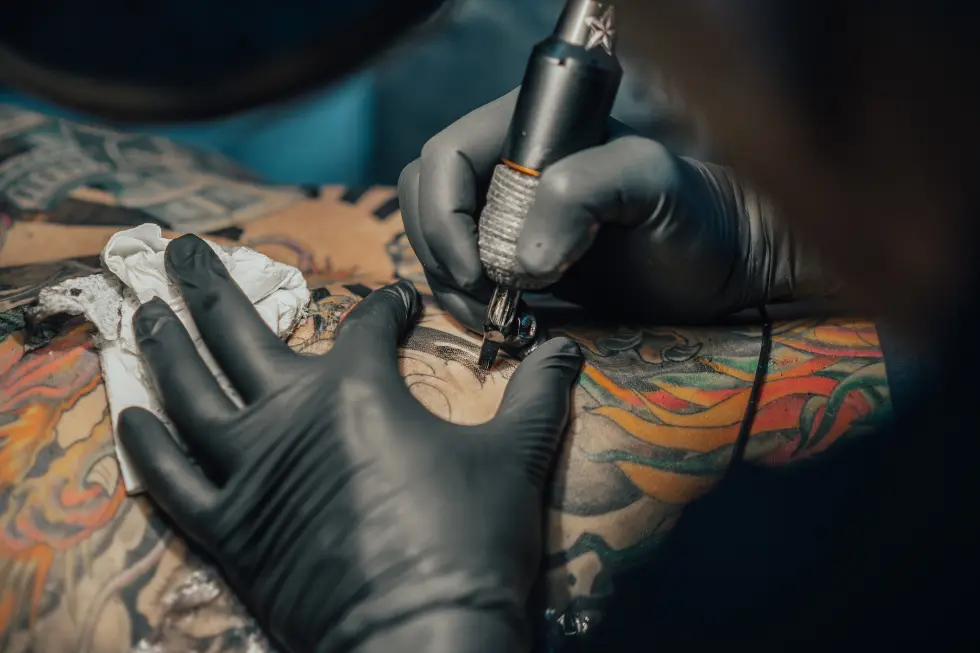
A professional tattoo touch-up involves your artist refreshing faded ink, fixing patchy areas, or sharpening lines on your existing tattoo. The session typically takes 30 minutes to 2 hours, depending on the size, with healing occurring in 2-3 weeks. Most studios offer a complimentary initial touch-up within the first year to address any imperfections from the healing process. One in four Australians now has at least one tattoo, making touch-up services increasingly important for maintaining ink quality over time
So here’s what to expect:
1. Initial Tattoo Assessment
Before any ink touches your skin, your tattoo artist will have a good look at what needs fixing. This assessment is crucial to understanding exactly what your tattoo needs.
During this stage, your artist will examine:
- Fading areas – Where colours have dulled or lost vibrancy
- Line quality – Spots where crisp lines have become blurry or uneven
- Colour consistency – Patchy sections where ink didn’t take evenly
- Overall integrity – How well the original work has held up
Your artist will check if your tattoo is fully healed before proceeding. A new tattoo needs at least 6-8 weeks to heal completely, though the healing skin underneath continues regenerating for up to 6 months. Getting a touch-up too soon can damage the healing process and create scar tissue that won’t hold ink properly.
The assessment also considers your skin type and lifestyle factors. If you’ve had significant sun exposure without proper sun protection, this affects how the ink has faded. High-friction areas like hands, feet, and joints tend to need touch-ups more frequently than other spots.
2. Design Review & Touch-Up Planning
After assessing your tattoo, your artist will map out exactly what needs attention. This isn’t about redoing the whole piece; it’s targeted work to bring back what time has taken away.
Your artist might discuss:
- Which sections need colour refreshing
- Where linework requires sharpening
- If any shading needs to be deepened
- Whether the original design needs slight adjustments
This is your chance to mention anything you’ve noticed. Maybe one colour has faded faster than others, or certain lines aren’t as defined as they used to be. Your input helps create the best plan for the touch-up work.
The planning stage also covers realistic expectations. Some old tattoos with significant fading might need multiple touch-up sessions rather than just one. Black and grey tattoos typically hold up better than bright colours, which fade faster under UV exposure.
3. Preparing the Skin for a Touch-Up
Proper skin prep makes all the difference for better ink retention and a smoother healing process.
Pre-appointment care:
- Keep the area clean and moisturised for a few days before
- Avoid sun exposure and don’t use tanning products
- Skip the gym on appointment day – sweaty skin isn’t ideal for tattooing
- Stay hydrated and get good sleep the night before
- Don’t drink alcohol 24 hours before your session
On the day of your touch-up, your artist will clean and sanitise the tattoo area thoroughly. They’ll likely shave any hair around the site, even if it’s just light fuzz. This creates a smooth surface for the needle and stencil work.
Your artist might apply a thin layer of transfer solution before placing any stencil guides. This helps them see exactly where they’re working, especially when matching existing linework or filling specific faded patches.
4. The Tattoo Touch-Up Process
The actual touch-up isn’t much different from getting a tattoo the first time around. Your artist uses the same professional tattoo equipment and high-quality ink.
What happens during the session:
First, your artist applies the stencil if needed for guidance on specific areas. For simple colour refresh work, they might skip this step entirely.
The tattooing begins with your artist working methodically through each problem area. They’ll use precise needle techniques to deposit tattoo ink into exactly the right spots. When refreshing faded colours, they’ll match the original pigment carefully – though sometimes using better ink can actually improve on the initial work.
For linework touch-ups, your artist takes extra care to follow the original lines. They might go slightly wider if the original lines have spread over time, creating sharper definition. Shading work involves building up layers gradually to match the existing gradient.
Throughout the session, your artist wipes away excess ink frequently. This lets them see exactly what they’re doing and ensures the fresh tattoo work blends seamlessly with the existing tattoo.
How Long Does a Tattoo Touch-Up Take?
The duration varies based on what needs fixing, but most sessions are quicker than your initial appointment.
Typical timeframes:
- Minor touch-ups: 15-30 minutes for small colour corrections or a few line fixes
- Standard sessions: 1-2 hours for moderate fading across a larger area
- Extensive work: 2-4 hours for significant colour restoration or major line corrections
Smaller tattoos obviously take less time than large pieces. A simple black and grey design might only need 20 minutes to sharpen up, while a full-colour sleeve could require multiple hours spread across several touch-up sessions.
The good news? Touch-ups are almost always faster than the original tattoo session. Your artist is only working on specific areas rather than creating the entire design from scratch.
Pain Level During a Touch-Up
Let’s be honest: it still involves needles, so yeah, there’s some discomfort. But the pain level during a touch-up varies quite a bit.
Why pain levels differ:
Some people reckon touch-ups hurt less than the initial tattoo because they know what to expect. The skin’s already been tattooed, so there’s less of that initial shock. Plus, since the artist is only working on small sections, you’re not sitting for as long.
Others find going over tattooed skin more sensitive. The area might have nerve endings that healed differently, or there could be slight scar tissue that reacts to the needle. It really depends on your body and the tattoo location.
High-friction areas and spots with thin skin (like ankles, ribs, or hands) will still be uncomfortable. But the shorter session time makes it more manageable than your initial appointment.
Pain management tips:
- Stay relaxed and breathe steadily
- Avoid caffeine before your session
- Eat a proper meal beforehand
- Let your artist know if you need breaks
- Focus on the result, looking sharp, fresh ink
Aftercare Instructions After a Touch-Up
Proper aftercare is absolutely crucial. You’ve just paid for professional work, so don’t stuff it up by skipping the healing basics.
Your artist will send you home with specific aftercare instructions – follow them to the letter. Generally, this includes:
First 24-48 hours:
- Keep the bandage on for the time your artist specifies
- Wash gently with lukewarm water and fragrance-free soap
- Pat dry with a clean towel, don’t rub
- Apply a thin layer of recommended aftercare products
Days 3-14:
- Wash 2-3 times daily
- Keep it moisturised but not soaking wet
- No scratching, even when it itches like crazy
- Avoid hot tubs, swimming pools, and the ocean
- Wear loose clothing that won’t rub against the fresh tattoo
- Stay out of direct sunlight
Sun protection is essential – UV rays are one of the main culprits behind tattoo fading. Once healed, use sunscreen with at least SPF 30 whenever the tattoo and keep it covered or protected. This prevents future fading and reduces the need for frequent touch-ups.
Don’t use petroleum-based products during healing. Stick to proper tattoo aftercare ointments or fragrance-free moisturisers your artist recommends.
Healing Timeline for Tattoo Touch-Ups
The healing process for touch-ups follows a similar pattern to your original tattoo, though it’s often faster since you’re working with smaller areas.
- Week 1: The surface layer looks red and feels tender. You might see some plasma oozing – that’s completely normal. The area will start to scab by the end of the week.
- Week 2: Scabbing continues and the itching really kicks in. This is when people most often mess up their healing by scratching or picking. Don’t do it. Let the scabs fall off naturally.
- Weeks 3-4: Most of the healing skin has finished its job. The tattoo looks mostly healed on the surface, though deeper layers are still regenerating. Colours might look a bit dull still – they’ll brighten up as healing completes.
- Months 2-3: The tattoo is fully healed underneath. Colours have settled into their final appearance, and you can properly assess whether everything you need has been addressed.
Research shows that touch-ups typically heal within 2-3 weeks since they involve smaller areas than the initial tattoo work. Your body’s already familiar with the ink, which can speed things along.
When Additional Touch-Ups May Be Needed
Not every tattoo requires constant maintenance, but certain factors mean you’ll be back in the chair sooner rather than later.
Your tattoo needs a touch-up when:
- Lifestyle factors: If you’re outdoors heaps without sun protection, your ink will fade faster. The same goes if you work in high-friction areas – mechanics, landscapers, and tradies often see their hand and arm tattoos need more frequent attention.
- Tattoo location: Hand and finger tattoos need touch-ups every 2-4 years because these high-friction areas cop it more than others. Elbows and knees also distort and fade faster due to constant movement.
- Colour choices: Bright colours like yellow, pink, and light blue fade faster than darker pigments. Black and grey work holds up best, while vibrant colours might need refreshing every 3-5 years.
- Skin changes: Significant weight fluctuations, muscle gain, or ageing skin can distort tattoo work over time. Pregnancy can stretch the designs on the belly and hips.
- Original work quality: If the initial tattoo was done with lower-quality ink or by less skilled artists, you’ll likely need touch-ups sooner. High-quality ink from experienced professionals lasts longer.
- Healing issues: If you had imperfections during the initial healing – maybe some ink didn’t take properly or created patchy spots – those areas will need addressing sooner.
Signs you need a touch-up:
- Lines have become blurry or spread out
- Colours look faded or washed out
- Patchy areas where ink seems lighter
- Overall loss of vibrancy and sharpness
- Uneven sections that don’t match the rest
Most professional studios recommend assessing your tattoo annually and getting touch-up work done every 5-10 years for standard pieces. Fine linework and colour-heavy designs might need attention sooner.
Prevention beats cure:
Using high-quality sunscreen (minimum SPF 30) on tattooed skin every time you’re outside significantly extends how long your ink looks fresh. Moisturising regularly keeps skin healthy and ink vibrant. These simple habits reduce the need for frequent touch-ups.
A touch-up isn’t a sign you got dodgy work – it’s just normal maintenance for keeping your tattoo looking how you want it. Even the best tattoos done by the most skilled artists will fade over time. That’s just how skin and ink work together.
Ready to bring your tattoo back to life? Book a consultation with Art n Soul’s experienced artists. We’ll assess your ink, discuss everything you need to know about tattoo touch-ups, and create a plan to keep your tattoo looking fresh. Our team uses high-quality ink and proven techniques to deliver results that last. Visit us or get in touch today. Let’s make your tattoo look as good as the day you got it.
Frequently Asked Questions
Does a tattoo touch-up hurt more than the original tattoo?
Pain levels vary from person to person. Some find it less painful because they know what to expect, while others experience more sensitivity on already-tattooed skin. The good news is that touch-up sessions are usually much shorter.
How soon can I get a touch-up after my tattoo heals?
Wait at least 6-8 weeks for surface healing, though complete healing takes up to 6 months. Your initial touch-up is typically offered within the first year as a complimentary service to fix any healing imperfections.
How long does a touch-up session usually take?
Most touch-up sessions take 30 minutes to 2 hours, depending on how much work is needed. Minor colour corrections might only take 15-20 minutes, while extensive restoration work could take several hours.
Can any tattoo artist do a touch-up?
While technically yes, it’s best to return to your original artist if possible. They know the design intimately and can match their work perfectly. If that’s not an option, find an experienced artist whose style matches your existing tattoo.
Will a touch-up make my tattoo look brand new?
A good touch-up can dramatically improve your tattoo’s appearance, refreshing faded colours and sharpening blurry lines. However, it works within the existing framework – it enhances what’s there rather than completely recreating the original. With proper touch-up work and correct aftercare, your ink will definitely be looking fresh and vibrant again.