
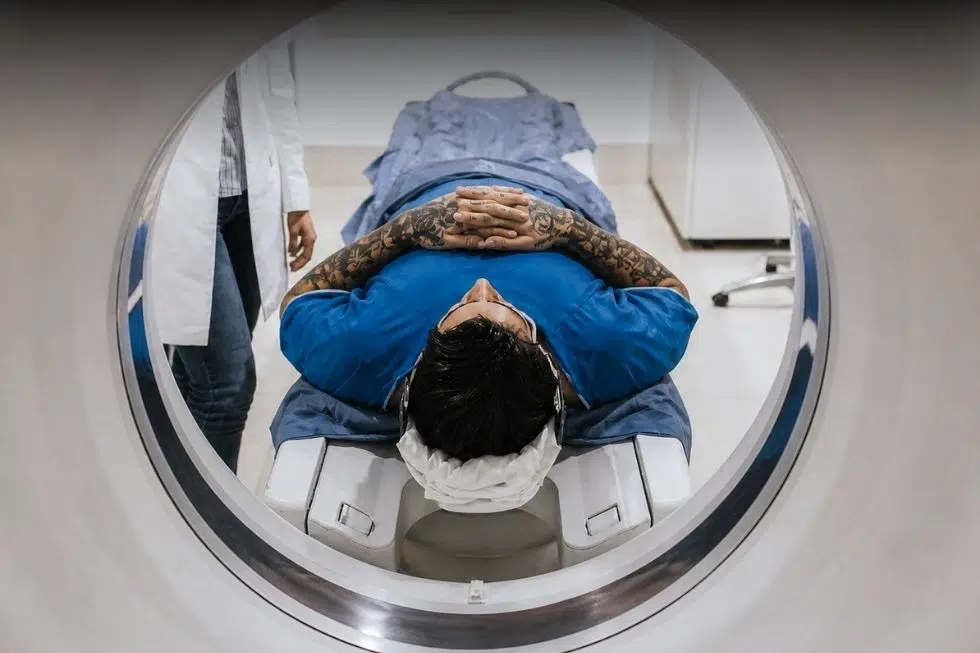
If you’ve just booked in for a medical imaging scan and you’re covered in ink, you’re probably wondering whether your tattoos are going to cause any problems. It’s one of the most common questions we get at Art N Soul, and honestly, it’s a fair one. The short answer is that most tattooed Australians can go ahead with their scan without drama. But there are a few things worth knowing before your appointment.
According to McCrindle Research, one in four Australians now has at least one tattoo, a record high, up from just one in five in 2018. With diagnostic imaging services increasing every year, the overlap between tattooed patients and those needing a magnetic resonance imaging procedure is bigger than ever.
Here’s everything you need to know.
Can You Have an MRI Scan If You Have Tattoos?
Yes, in most cases, you absolutely can. Having a tattoo is not a reason to cancel or postpone your MRI scan. Studies have found that fewer than 1% of people with tattoos experience any discomfort during an MRI.
That said, the MRI scanner environment involves a strong magnetic field, and certain tattoo inks can interact with it in minor ways. The key is to disclose your tattoos to your radiology team ahead of time and let the qualified radiographer prepare accordingly.
What factors matter most?
- Where the tattoo is located on your body
- The colour of the ink (red and black inks have historically been more reactive)
- Whether the tattoo is old or freshly done
- How large is the tattooed area
- Whether you have permanent makeup or cosmetic tattoos
The Royal Australian and New Zealand College of Radiologists (RANZCR) publishes MRI Safety Guidelines that Australian radiology clinics must follow. The RANZCR places heavy emphasis on screening potential MRI patients before they enter the scanner environment.
Why Tattoo Ink Can React Inside an MRI Machine
An MRI scan uses a strong magnetic field and radio waves to create detailed images of your soft tissues, organs, and blood vessels, unlike an X-ray or CT scan, which uses radiation. The issue with tattoo ink is that some pigments contain metallic compounds that can respond to that magnetic field.
The Role of Iron Oxide and Metallic Pigments
MRI scanners generate strong magnetic fields, often 1.5 to 3 Tesla, thousands of times stronger than Earth’s magnetic field, and radiofrequency pulses to create detailed images. Tattoo inks, particularly older formulations, may contain metallic compounds like iron oxides, which are ferromagnetic and can interact with these fields.
Iron oxide pigment is the main culprit here. It’s a ferromagnetic material, meaning it can respond to a magnet. When it heats up in the MRI scanner, some patients may feel a warming or tingling sensation at the tattoo site.
Other metallic pigments sometimes found in older inks include:
- Cobalt (used in blue inks)
- Titanium dioxide (used in white inks)
- Chromium (used in green inks)
- Manganese (used in purple inks)
The good news is that modern tattoo ink formulations, like those used at Art N Soul’s Melbourne studio, are far less likely to contain high levels of these metallic compounds. Reputable Melbourne tattoo studios use quality, regulated inks.
Older Tattoos vs Modern Inks: Which Are Riskier?
Until the early 2000s, inks were largely unregulated, and some contained ferromagnetic materials like iron oxides or heavy metals. While modern inks are safer due to improved regulations, not all countries enforce strict standards.
If your tattoo was done before 2000, especially if it was done overseas, it’s worth mentioning this to your radiographer. It doesn’t mean you can’t have the scan; it just means the radiology staff should be informed so they can monitor you properly during the procedure.
| Ink Type | Risk Level | Notes |
| Modern Australian studio ink | Low | Quality regulated inks, minimal metallic content |
| Older inks (pre-2000) | Moderate | Higher chance of iron oxide pigments |
| Permanent makeup / cosmetic tattoos | Moderate | Often contain iron oxide-based pigments |
| Red and black inks | Moderate | Historically, more reactive; inform staff |
| Overseas tattoos (unregulated markets) | Variable | Disclose location and approximate year |
What an MRI Reaction Actually Feels Like
It’s important to put this in perspective: serious reactions are rare. Most tattooed patients lie in the MRI scanner and feel absolutely nothing unusual in their tattoos.
Burning, Tingling and Swelling Symptoms
In the minority of cases where a reaction does occur, patients typically describe:
- A warm or hot sensation at the tattoo site
- Tingling or prickling
- A tight feeling in the skin
- Redness or minor swelling after the scan
A comprehensive review of published case reports found 17 cases of MRI-induced tattoo complications in the medical literature. Symptoms are abrupt and painful with a fast onset during the MRI, sometimes requiring termination of the procedure. No thermal skin burns have been recognised, and full recovery is fast, with no lasting effects.
If you feel anything unusual during your scan, press the buzzer that the radiographer gives you before the procedure begins. The imaging team will pause or stop the scan and assess what’s happening. You should never try to push through significant discomfort.
How Common Are These Reactions in Australia?
In a large prospective study of 330 participants undergoing 585 MRI sessions, the estimated probability of an adverse reaction was 0.17%, and in the one case classified as a mild tattoo-related reaction, the sensation fully resolved spontaneously within 24 hours without medical intervention.
In practical terms, this means the vast majority of tattooed Australians will go through their scan without any issues. That said, it’s not a reason to skip disclosure. The staff at any reputable radiology clinic in Melbourne or elsewhere need this information to do their job properly.
What to Tell Your Radiologist or Imaging Technician
This is one of the most important things to get right, and it’s simple. Before your scan, tell the radiology staff about your tattoos. Do not assume they’ll notice or that it doesn’t matter.
-
Disclosing Tattoos on Pre-Scan Forms
When you book your MRI appointment, you’ll typically receive a safety questionnaire either online or at the clinic. This form will ask about implants, pacemakers, and other metal objects in or on your body. Many forms also ask about tattoos specifically. Answer these questions honestly and in detail.
When disclosing, it’s helpful to mention:
- Location: Which part of the body is tattooed
- Size: Rough estimate, for example, full sleeve vs small ankle piece
- Age of the tattoo: Approximate year it was done
- Colour: Particularly if you have heavy black or red areas
- Type: Whether it’s a decorative tattoo or permanent makeup
All patients must be screened for tattoos before entering the MRI environment as part of comprehensive safety protocols. Documentation should include the presence, location, colour, and age of all tattoos, including cosmetic tattoos.
Your doctor or specialist who referred you for the scan should also be informed. If you have concerns, raise them at the time of your referral, not on the day of the scan.
-
Permanent Makeup and Cosmetic Tattoos
This is an area where a lot of patients get caught out. Permanent makeup, including tattooed eyebrows, eyeliner, lip liner, and areola restoration tattoos, counts as a tattoo for MRI purposes. Staff should specifically ask about permanent makeup on eyebrows, eyeliner, and lips.
Many radiologists have historically refused to perform examinations on individuals with permanent cosmetics, particularly tattooed eyeliner, based on a few reports of symptoms. This undue concern for possible adverse events has prevented patients with cosmetic tattoos from accessing an important diagnostic imaging technique. However, with proper disclosure and preparation, this does not need to be a barrier.
If you’ve had any cosmetic tattooing, inform the imaging clinic at the time of booking. They may apply a cold compress or a monitoring patch over the area during the procedure.
Image Distortion: When a Tattoo Affects Scan Quality
Beyond the question of physical discomfort, some tattoos can affect the quality of the image produced during the scan. This is more of a technical concern for the radiologist interpreting the results.
Metallic elements in some tattoo inks can create artefacts (distortions) in MRI images, potentially affecting diagnostic accuracy, especially in areas where the tattoo is close to the scanned part of the body.
In practical terms, this means that if you have a large tattoo over your abdomen, for example, and you’re having an abdominal MRI, the imaging technician needs to know about it. They may adjust the scan detail, change the coil position, or note the distortion in their image report so the radiologist can interpret the scan results accurately.
This is rarely a reason to avoid a magnetic resonance imaging procedure entirely. In cases where image quality is significantly compromised, your doctor may recommend a CT scan, ultrasound, or X-ray as an alternative type of scan, depending on what they’re looking for.
What to Do If You Feel a Reaction During the Scan
Before the scan begins, the radiographer will give you a buzzer or headphone system so you can communicate from inside the MRI scanner. Here’s what to do if you notice anything uncomfortable:
- Press the buzzer immediately. Do not wait to see if it gets worse.
- Describe what you feel so the radiographer can assess whether to continue.
- The scan may be paused or stopped. This is normal and nothing to be embarrassed about.
- After the scan, if you notice redness, swelling, or warmth around your tattoo, advise the radiology staff before you leave the clinic.
- If symptoms persist after you leave, contact your doctor or the imaging clinic for follow-up instructions.
You should also remove jewellery before entering the MRI scanner room, as metal objects of any kind pose a greater risk than tattoo ink. Staff will advise you to change into a gown and remove any watches, jewellery, and clothing with metal fasteners.
Patients should be informed that any symptoms will be temporary and will not cause permanent skin damage.
Tattoos, MRI and Cancer Diagnoses: What Patients Should Know
For patients who have been referred for oncology-related imaging, this topic takes on extra weight. If you’re going through a cancer diagnosis or treatment in Melbourne or anywhere in Australia, you may need multiple scans over a period of time. Some patients also receive contrast dye, also called contrast imaging agent or gadolinium, injected as a dye via an injection to help the radiologist see certain tissues more clearly.
There are a few things to know in this situation:
- Contrast dye and tattoos: The use of contrast dye during an MRI is unrelated to tattoo ink. If your doctor has ordered a contrast MRI, the procedure involves an injection of gadolinium contrast dye through a vein, not anything that affects your tattoo.
- Radiation: MRI does not use radiation, unlike an X-ray or CT scan. This is one of the reasons it’s preferred for certain types of imaging, including soft tissues and organs like the brain.
- Repeat scans: Some patients worry that repeated exposure to the MRI scanner field will increase tattoo reactions over time. Current evidence does not support this concern.
- Sedation: Some patients, particularly those with claustrophobia or anxiety, may be offered sedation for their MRI procedure. If this applies to you, discuss it with your doctor or specialist at the time of your booking or referral.
If you’re a cancer patient, please speak directly with your oncologist and the medical imaging team about any concerns related to your tattoos. They are the appropriate specialists for your situation.
Frequently Asked Questions
1. Can I have an MRI with a new tattoo?
It’s best to wait at least six to eight weeks after getting a tattoo before having an MRI scan. Fresh tattoos contain residual moisture and may have a higher metallic content during the healing process. Advise your imaging clinic about the timing when you make your booking.
2. Do I have to remove jewellery before an MRI?
Yes. All patients must remove jewellery before entering the MRI scanner room. Staff will ask you to change into a gown and remove all metal objects, including watches and body piercings.
3. Will my tattoo be visible on the scan results?
In some cases, metallic ink can cause minor image distortion. Inform your radiographer so they can adjust the procedure and note any artefacts for the radiologist interpreting the images.
4. Is a CT scan safer than an MRI for someone with tattoos?
A CT scan uses radiation rather than a magnetic field, so it does not interact with tattoo ink in the same way. Your doctor will recommend the right type of scan based on your medical needs, not your tattoos.
5. Do I need to tell the staff about my permanent makeup?
Yes, this is important to tell your radiology team before the scan. Cosmetic tattoos, including tattooed eyebrows and eyeliner, often contain iron oxide pigments that can react in an MRI scanner.