
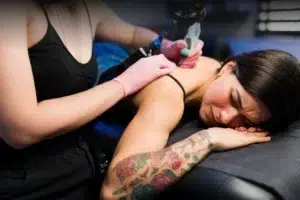
Tattoo regret does not mean you made a foolish decision. Bodies change, styles change, relationships end, and work that once felt right can stop feeling like you. What matters now is choosing the option that fits the tattoo you actually have, not the one you wish were underneath it.
At Art n Soul, we provide cover-ups, reworks, touch-ups and colour correction. We do not provide laser tattoo removal. We can still explain how removal fits into the decision so you can compare the routes honestly. This guide will walk you through what each option can and cannot do, the questions we ask in a consultation, and why sometimes the best first step is to leave the tattoo alone until you have a clear plan.
Start with the outcome you want
Before thinking about technique, decide what would make you comfortable again. Do you want the old design completely hidden? Do you still like the idea but not the execution? Would a lighter tattoo give an artist more room? Or do you want clear skin rather than another tattoo?
Those goals point in different directions:
- Cover-up: you want a new tattoo and accept that its design must work over the old one.
- Rework: you want to keep the subject but improve shape, contrast, colour or detail.
- Touch-up: you like the tattoo and mainly want to refresh settled or faded areas.
- Laser removal: you want to remove ink or fade it before another tattoo.
- Wait: the tattoo is new, the skin is healing, or you have not decided what you want next.
There is no prize for choosing quickly. A considered plan is usually kinder to both the skin and the final design.
How the options compare
The practical differences are easier to see together.
| Option | Usually suits | Main limitation |
| Cover-up | Someone who wants a different tattoo over the old work | New design often needs to be larger, darker or strategically placed |
| Rework | A recognisable design with usable structure | Cannot always correct poor placement or very dense lines |
| Touch-up | A tattoo that has settled or faded but is otherwise sound | Does not redesign a tattoo you no longer like |
| Laser fading | A dense or dark tattoo that limits cover-up choices | Requires an external qualified provider and multiple healing cycles may be needed |
| Full removal | Someone who does not want another tattoo | Complete clearance cannot be promised and skin changes are possible |
This table is a starting point. Ink colour, depth, scarring, location, skin condition and the new idea all change what is realistic.
When a cover-up makes sense
A cover-up uses a new composition to distract from and physically cover the old pigment. It is not a matter of drawing the same-sized image on top. The artist works with the darkest shapes, open skin and natural movement of the body.
A cover-up often has the best chance when:
- you are open to a design larger than the existing tattoo
- the new subject has enough texture, shading or colour variation
- the old tattoo has settled fully
- there is room to move the focal point away from the darkest area
- you trust the artist to adapt the reference rather than copy it exactly
Black ink does not become invisible under pale yellow or white. Fine line work cannot simply erase a heavy tribal shape. We would rather explain those limits at the beginning than agree to a design that will read as two tattoos fighting for the same space.
Our tattoo cover up artist page shows the service we provide in Adelaide. The consultation is where we can trace the existing tattoo, study how it has aged and sketch a composition that belongs on your body rather than on a blank sheet.
When reworking is the better choice
Sometimes the tattoo does not need to disappear. It may need stronger contrast, repaired linework, a clearer focal point or a background that makes the original subject feel intentional.
Rework can suit:
- an older tattoo that has softened but still has a sound design
- colour that needs balancing rather than complete replacement
- an unfinished piece you still want to complete
- lettering with enough space for careful correction
- a tattoo whose main subject can be preserved inside a larger composition
We assess what is in the skin, not just the reference image. Adding more pigment to every line can make an already crowded tattoo heavier. Good reworking often involves choosing what to leave alone.
Where a touch-up fits
A touch-up restores parts of a tattoo that have not healed or aged evenly. It is most appropriate when you still like the design and the structure does not need to change.
We look at whether the tattoo is fully healed, how it was cared for, how much sun the area receives and whether friction affects it. A touch-up cannot correct every issue. Blowout, scarring, very close detail and poor placement may require a different conversation.
You can read more about our touch-up service before sending your photos. We will tell you honestly whether refreshing, reworking or covering gives the idea more room.
When laser fading may open up the design
Dense black areas and very dark outlines can restrict a cover-up. In those cases, partial laser fading may create more negative space and let the new artist use a broader range of subjects and values.
Art n Soul does not perform laser tattoo removal, so treatment advice, suitability, settings, aftercare and fees must come from a qualified removal provider. We also do not promise how many sessions you would need or how completely ink will clear.
If your aim is a later cover-up, tell both professionals. The removal provider needs to understand that fading may be the goal, while the tattoo artist needs to see how the ink and skin settle before committing to the final design.
What about full laser removal?
Full removal may be the clearest choice when you do not want another tattoo. It is a medical or cosmetic laser service separate from our studio. Results vary with pigment, density, depth, age, location, skin response and the device used.
Do not plan over a tattoo that is still healing
A fresh tattoo can look cloudy, uneven or lighter while it heals. Peeling, dryness and temporary dullness are not a reliable preview of the settled result. Picking, over-moisturising or covering it with another product can make matters worse.
Contact the original studio if you are worried about healing. Seek medical advice for spreading redness, worsening heat, pus, fever or significant pain. Once the skin has fully settled, the options are easier to judge.
What we need for a useful consultation
You do not need a finished replacement design. A few practical details help us give a much more honest answer:
- Clear photographs in natural light, including one that shows the body placement.
- The approximate age of the tattoo and whether it has been treated before.
- Any known scarring, raised areas or skin conditions.
- Reference images showing the direction you like, not ten copies of one exact tattoo.
- Whether the goal is concealment, improvement or eventual removal.
- How much larger you are willing to go.
During the consultation, we discuss the darkest areas, likely focal point, size, style and colour approach. We may suggest a different subject from the one you arrived with. That is not dismissal; it is the design responding to what is already there.
Questions worth asking any artist
Tattoo regret can make people eager to accept the first reassuring answer. Slow the process down and ask:
- Have you completed cover-ups with a similar density and placement?
- Can I see healed examples as well as fresh photographs?
- Which parts of my idea need to change, and why?
- Is laser fading worth considering before we design?
- How will this piece read from normal viewing distance?
- What happens if the old pigment remains visible after healing?
An artist who explains limitations is giving you useful information. Absolute promises about concealment or healing should make you cautious.
Looking after the next decision
Once you choose a route, protect the process. Follow the provider’s aftercare, avoid sun exposure while the skin heals, and do not book removal and tattoo sessions too close together. Each professional should assess the skin before the next stage.
If you choose a cover-up or rework with us, we will provide aftercare appropriate to the tattoo. Long-term sun protection also helps preserve contrast and colour, although every tattoo changes gradually with skin and time.
Talk your tattoo through with us
People looking for the best tattoo in Adelaide are really looking for an artist whose work and advice they can trust. We have welcomed first-timers and heavily tattooed clients at our Prospect studio since 2012, and there is no judgement attached to changing your mind.
Call us on (08) 8269 6383 or send an enquiry with clear photos. We will tell you whether we see a realistic cover-up, rework or touch-up path. If laser removal is the more appropriate route, we will be clear that it is not a service we provide.
Frequently asked questions
1. Can every tattoo be covered?
No. Very dark, dense, scarred or badly placed tattoos may need fading, a much larger design or another approach. We need to see the tattoo before advising.
2. Does a cover-up have to be black?
Not always. Colour can be useful, but it cannot behave like opaque wall paint. The palette and value range must work with the existing pigment.
3. Is tattoo regret common?
Many people reconsider old work for ordinary personal or aesthetic reasons. We focus on the next decision rather than judging the first one.
4. Can you remove my tattoo at Art n Soul?
No. We do not provide laser tattoo removal. We provide tattooing, cover-ups, reworks, touch-ups and colour correction