
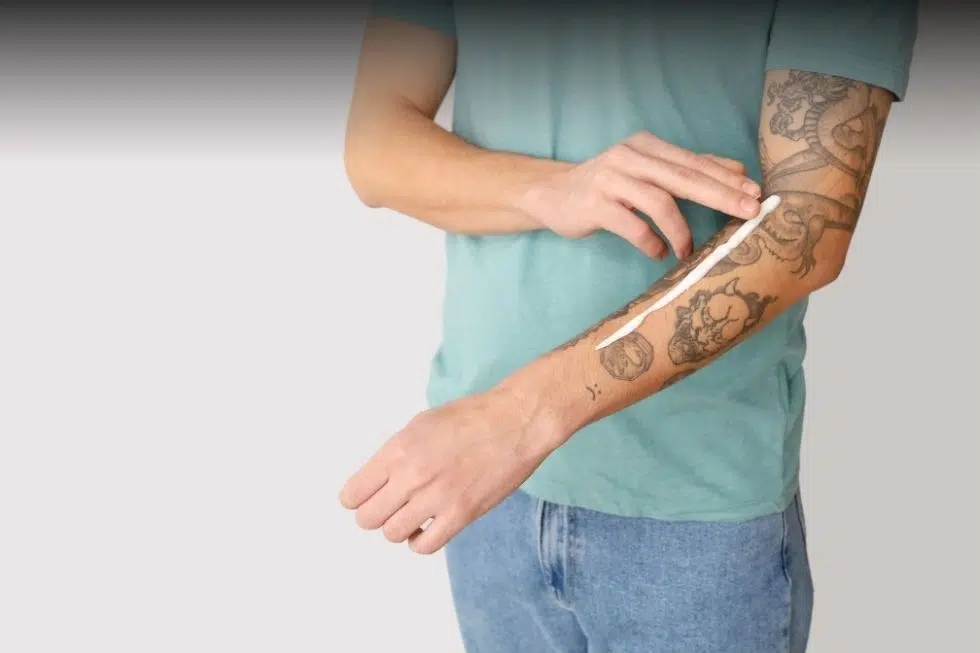
Getting a tattoo is exciting, but let’s be real, the question of pain management comes up in pretty much every client consultation. More people are walking into studios asking about numbing creams than ever before. And that makes sense. One in four Australians now has at least one tattoo, a record high, up from just one in five in 2018. With that growing number comes a growing curiosity about making the experience as comfortable as possible.
But here in Australia, and especially here in Adelaide, numbing cream is not as simple as popping down to the chemist and slathering something on. There are regulations, ingredient limits, and artist preferences to consider. This guide covers all of it, so you can make an informed decision before your next session.
What Is Tattoo Numbing Cream and How Does It Work?
Tattoo numbing creams are topical anaesthetics applied to the skin before a procedure to dull the sensation of pain. They work by temporarily blocking nerve signals in the area where they’re applied, which reduces how much discomfort you feel during tattooing.
Think of it like a mild version of the anaesthetic your dentist uses, but applied to your skin rather than injected.
Active Ingredients: Lidocaine, Prilocaine, Benzocaine
Most topical anaesthetic products you’ll find at a pharmacy or through a compounding chemist contain one or more of the following active ingredients:
- Lidocaine (also called lignocaine): The most common numbing agent used in tattoo numbing creams. It is available in varying strengths, with tighter regulations applying as the concentration increases.
- Prilocaine: Often combined with lidocaine. EMLA cream, one of the most well-known products in Australia, contains both 2.5% lidocaine and 2.5% prilocaine.
- Tetracaine: Less common over the counter, but found in some compounded formulations.
- Benzocaine: Found in some products, though less frequently used in professional settings in Australia.
How Long Does It Take to Work and How Long Does It Last
This is one of the most common questions clients have. The answer depends on the product and where it’s applied.
- Most topical anaesthetic creams need at least 45 to 60 minutes to reach full effectiveness.
- You’ll typically need to cover the area with cling wrap after application to help the cream penetrate.
- The numbing effect generally lasts for around three to four hours, depending on your skin type and the location being tattooed.
- Thicker skin, like on the back or thighs, may require a longer application time.
- The numbing effect wears off gradually, so it may not last the full length of a long session.
Is Numbing Cream Legal in Australia? TGA Regulations Explained
Yes, numbing cream is legal in Australia, but there are important rules around which products you can use and where you can get them from. The Therapeutic Goods Administration (TGA) and, here in South Australia, the Controlled Substances Act 1984 govern how these medicines can be sold and used.
Tattoo artists and laser technicians are not authorised to sell or supply scheduled medicines to members of the public. The illegal sale, supply, or administration of a scheduled medicine carries a maximum penalty of $10,000 or imprisonment for two years.So your artist cannot sell you numbing cream directly. It needs to come from a pharmacy or, for stronger formulations, through a prescription from a doctor.
-
Lidocaine Strength Limits Available Over the Counter
The schedule of a numbing cream depends on how much lidocaine it contains. Here is how it breaks down under the Standard for the Uniform Scheduling of Medicines and Poisons (SUSMP):
| Schedule | Lidocaine Concentration | Where to Get It |
| Schedule 2 | More than 2% but less than 10% | Pharmacy, no prescription needed |
| Schedule 4 | More than 10% | Pharmacy, prescription required |
Topical anaesthetics in Australia that contain between 2% and 10% lidocaine, such as EMLA and Nummit, are Schedule 2 and available over the counter at a pharmacy. Products with more than 10% lidocaine are Schedule 4 and require a prescription from a doctor.
So if someone is selling you a high-strength numbing cream without a script, that is a red flag.
For clients in Adelaide looking for a stronger topical anaesthetic, the best option is to speak with your GP and take the prescription to a compounding chemist. Some studios have established relationships with local compounding pharmacies that can prepare a product suited to your specific procedure.
Why Some Imported Creams Are Not TGA-Approved
You may have come across numbing creams online, often from overseas, with much higher lidocaine concentrations and attractive prices. The problem is that if a product does not carry an AUST R number on its label, it has not been approved for use in Australia through the Australian Register of Therapeutic Goods.
If your topical anaesthetic does not have an AUST R number or was not made by a compounding pharmacist, it is illegal to use it within Australia.
Beyond the legal issue, there is a real safety concern. Products from overseas may contain ingredients or concentrations that have not been assessed by the TGA, which means adverse effects are harder to predict and manage. European countries in particular have much more relaxed regulations around topical anaesthetics, making it easy to purchase high-strength creams that are not legally approved for use in Australia.
Do Adelaide Tattoo Artists Allow Numbing Cream?
This varies between studios and individual artists, and it is worth having an honest conversation before your appointment rather than turning up with cream already applied.
Some Adelaide artist are happy to work with clients who have used a TGA-approved numbing cream. Others prefer not to, and there are valid professional reasons for that preference.
Why Some Artists Refuse It (Skin Texture and Ink Absorption)
The main concern tattoo artists and laser technicians raise around numbing creams comes down to what the cream does to the skin itself, not just the nerve signals.
- When applied, some creams can cause the skin to become spongy, complicating the tattooing process. Other possible side effects include discolouration of the skin and increased sensitivity post-application.
- Some artists believe numbing creams can interfere with the integrity of the ink, which might penetrate differently due to the elastic quality the cream gives the skin, and may not maintain consistent colour.
- Pain can also serve as a natural guide for the artist. If a client is fully numbed, the artist may find it harder to gauge how much pressure is needed or when to adjust their technique.
None of this means numbing cream always ruins a tattoo. But it does mean your artist’s hesitation is coming from a place of professional experience, not from indifference to your comfort.
How to Have the Conversation With Your Artist
Here is how to approach it:
- Ask during the booking process, not on the day of your appointment.
- Let your artist know which product you’re planning to use and its strength. A Schedule 2 cream from the pharmacy is very different to a compounded higher-strength formula.
- If your artist says no, ask whether they have any alternatives they’re comfortable with, or whether there are techniques they use to manage client comfort.
- Respect their answer. They know how numbing cream affects their work on the skin, and that expertise matters for the quality of your tattoo.
How to Apply Numbing Cream Correctly Before a Tattoo
If you’ve confirmed with your artist that you can use a numbing cream, application technique matters a lot. Getting it wrong can reduce its effectiveness or cause unnecessary skin irritation.
Here is a general guide, though you should always follow the specific instructions that come with your product and consult a health professional if you have any concerns:
- Clean and dry the area thoroughly before applying. Dirty or oily skin reduces absorption.
- Apply a thick layer of cream directly to the site. A thin smear won’t do much.
- Cover the area with cling wrap to help the cream penetrate effectively and prevent it from drying out.
- Leave it on for at least 45 to 60 minutes before your appointment. Some products recommend up to 90 minutes.
- Remove the cream just before your session begins. Your artist may clean the area again before starting.
- Do not apply over broken or irritated skin. This increases the risk of the active ingredients being absorbed into the bloodstream at higher doses.
Never apply numbing cream to a larger area than needed, and avoid using more product than recommended on the packaging.
Risks, Side Effects and Allergic Reactions
For most people, a TGA-approved numbing cream used correctly carries minimal risk. But it’s important to be aware of potential adverse effects, especially if you have sensitive skin or a history of reactions to anaesthetic products.
Common side effects can include:
- Skin redness or irritation at the application site
- Mild swelling or a pale appearance to the skin
- A burning or tingling sensation during application
More serious concerns to be aware of:
- If cream is applied over a large area, there is a possibility that it gets absorbed into the bloodstream, which can cause dizziness or headaches, and in extreme cases, toxicity.
- The TGA has noted that overdose of EMLA cream can cause serious adverse effects, including methaemoglobinaemia, which in severe cases can lead to seizures.
- Allergic reactions, including redness, itching, or more severe responses, can occur in some individuals.
If you know you have an allergy to any local anaesthetic, do not use a numbing cream without first speaking to a health professional. A patch test on a small area of skin, applied 24 to 48 hours before your appointment, is a sensible precaution if you’re using a product for the first time.
If you experience any unusual symptoms after applying a topical anaesthetic, remove it immediately and seek medical advice.
Best Body Areas Where Numbing Cream Actually Helps
Numbing cream is not equally effective across all parts of the body. Its usefulness depends on skin thickness, proximity to bone, and how well the area absorbs the product.
Areas where numbing creams tend to be most effective:
- Upper arms and thighs: Fleshy areas with good absorption and relatively comfortable access.
- Shoulder and upper back: Popular placement, and cream can work well here with proper application.
- Calves and forearms: Moderate pain areas where numbing cream can take the edge off.
Areas where cream is less effective or more complicated:
- Ribs and sternum: Ribs are consistently rated as one of the most painful spots, with thin skin stretched over bone and the vibration travelling through the ribcage. Breathing also causes movement that increases pain. Cream helps to some degree but doesn’t eliminate the sensation.
- Hands and fingers: Thin skin and high nerve density mean cream absorption is unpredictable.
- Joints: Movement and bending can cause cream to shift or wear off faster.
For sessions in Melbourne or Adelaide covering larger, more sensitive areas like the ribs or spine, discuss with your artist well ahead of time whether numbing cream is appropriate.
Alternatives: Breathing Techniques, Breaks and Sugar Levels
Not everyone wants to use a topical anaesthetic, and not every situation calls for one. There are practical, natural methods for managing tattoo discomfort that are worth knowing about.
- Breathing techniques:
Controlled breathing helps calm the nervous system and reduces feelings of anxiety. When you’re more relaxed, your body can cope better with the continuous sensation of the tattoo machine.
Try these approaches:
- Diaphragmatic breathing: Breathe from your belly rather than your chest. Place a hand on your stomach and make sure it rises with each breath.
- Box breathing: Inhale for four counts, hold for four, exhale for four, pause for four. Repeat.
- 4-7-8 breathing: Inhale through your nose for four counts, hold for seven, exhale for eight.
- Strategic breaks:
Talk to your artist about taking short breaks if you need to. A few minutes of rest can give you time to stretch, hydrate, and recenter yourself. Frequent long breaks can have the opposite effect and intensify pain, so it’s recommended to keep breaks short. - Nutrition and hydration:
Eating a proper meal before your appointment keeps your blood sugar stable, which makes a real difference to your pain tolerance. Come in well-hydrated. Avoid alcohol for at least 24 hours before your session, as it thins the blood and can increase bleeding and sensitivity. - Distraction:
Music, a podcast, a conversation with your artist, or a simple focus technique can all help. Your mind is a powerful tool for pain management. Many Melbourne and Adelaide studios like Art n Soul are relaxed, welcoming environments, so lean into the atmosphere and try to stay present and calm.
Frequently Asked Questions
1. Can I buy tattoo numbing cream without a prescription in Australia?
Yes. Schedule 2 creams containing between 2% and 10% lidocaine are available over the counter at a pharmacy without a prescription. Stronger formulations require a script from a doctor.
2. Can my tattoo artist apply numbing cream for me?
No. Under Australian law, tattoo artists and laser technicians cannot sell or supply scheduled medicines to clients. You need to source and apply the cream yourself before arriving.
3. Will numbing cream affect how my tattoo looks?
It can, depending on the product and how it is applied. Some creams cause the skin to become slightly spongy, which may affect ink absorption and line consistency. Always check with your artist before using one.
4. Is it safe to use numbing cream on all body parts?
Not always. Avoid applying it to broken or irritated skin, and don’t use it near the eyes. Some areas absorb cream differently, and your artist or a health professional can advise on what’s appropriate for your placement.
5. What should I do if I have a reaction to numbing cream?
Remove the cream immediately, clean the area with water, and seek medical advice. If you experience dizziness, breathing difficulty, or significant swelling, treat it as a medical emergency and call 000.