
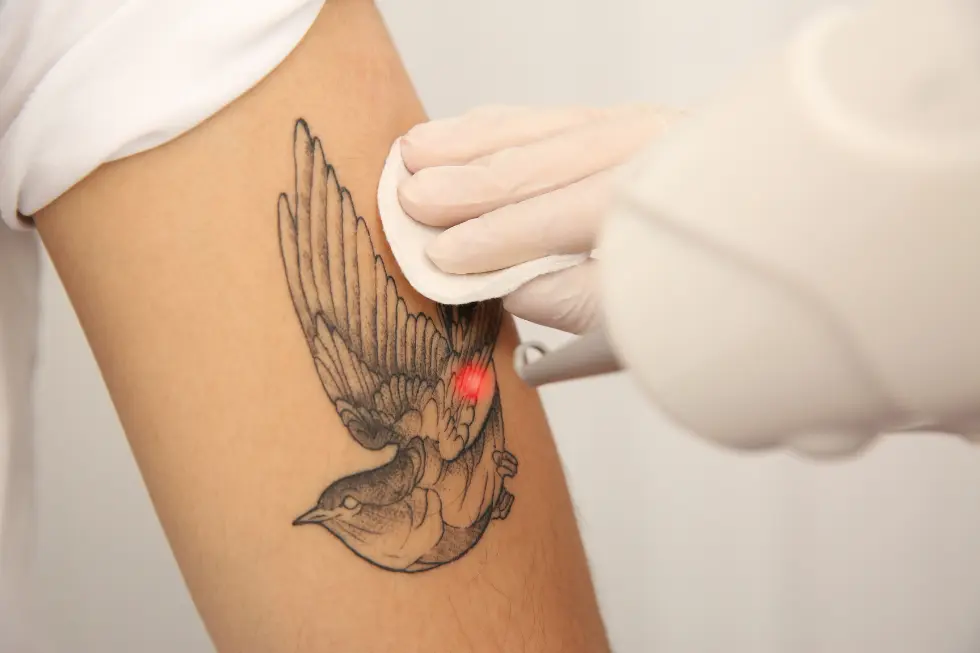
When deciding between laser tattoo removal vs tattoo cover-ups, both options effectively deal with unwanted ink. Cover-ups transform your old tattoo into a new design, whilst laser removal gradually fades or completely removes the ink.
According to recent data, around 34% of Australians with tattoos regret them, driving demand for both solutions. The best option depends on whether you want complete removal or simply want to transform your existing tattoo into something better.
What Is a Cover-Up Tattoo?
A cover-up tattoo involves tattooing a new design over the old one to hide an unwanted tattoo. This process requires a skilled tattoo artist who can strategically use darker ink, clever design choices, and proper placement to conceal the original tattoo beneath fresh artwork.
How cover-ups work:
- The tattoo artist assesses the characteristics of the original tattoo
- They create a new design that’s typically larger and darker than the old one
- Dark ink is layered over the existing tattoo to hide the old design
- The result transforms unwanted tattoos into new artwork you’ll love
Cover-ups involve more planning than getting a regular tattoo. Your artist needs to consider the size, colour, and placement of your current tattoo when designing the cover-up. Not all tattoos can be easily covered, very dark or dense ink may be harder to cover effectively.
What Is Laser Tattoo Removal?
Laser tattoo removal is a removal treatment that uses concentrated light pulses to break down tattoo ink particles beneath your skin. The process allows your body to naturally absorb and eliminate the ink over multiple sessions.
How laser removal works:
- Laser treatment targets the ink particles in your skin
- The laser breaks down the pigment into smaller pieces
- Your body’s immune system gradually flushes out these ink particles
- The tattoo fades progressively with each session
The Australian tattoo removal industry has grown significantly, with the market valued at $106.7 million in 2025. This growth reflects increasing demand for effective tattoo removal options across the country.
Cover-Up Tattoo vs Laser Removal – Key Differences
Understanding the main differences helps when making a decision between these two options:
Time commitment:
- Cover-ups can be completed in one or a few sessions
- Laser removal requires multiple sessions spaced 6–8 weeks apart
Design flexibility:
- Cover-ups limit your design choices, you’ll need darker, larger designs
- Complete removal offers a blank canvas for any new tattoo design
Pain levels:
- Cover-ups may hurt more than getting a tattoo on fresh skin
- Laser sessions are quick but can be uncomfortable
Results:
- Cover-ups give you a new tattoo immediately
- Laser removal gradually fades the tattoo or removes it completely
Long-term outcome:
- Cover-ups leave you with more ink on your body
- Removal offers the option to stay ink-free or choose any new design later
When a Cover-Up Tattoo Is the Better Choice
Choosing a cover-up makes sense in several situations:
- You want to keep a tattoo in that space: If you still love body art and simply want to replace an older tattoo with better artwork, cover-ups offer a practical solution.
- Your old tattoo is already fairly light: Small tattoos or those with minimal black ink are easier to cover without extensive preparation.
- You’re working with the right artist: An experienced tattoo artist specializing in cover ups can create stunning cover-up tattoo ideas that completely hide the old design.
- Budget considerations matter: Whilst cover-ups require more ink than regular tattoos, they’re often more affordable than multiple laser removal sessions.
- Time is a factor: Getting a tattoo covered happens quickly, usually in one appointment, compared to months of laser treatments.
Industry data shows that 50% of people who start laser removal eventually opt for a cover-up tattoo instead of full clearance, suggesting many Australians prefer transforming unwanted tattoos rather than complete removal.
When Laser Removal Might Be Necessary
Laser tattoo removal is the best option in these circumstances:
- You want the tattoo gone completely: If you don’t want any tattoo on that part of your body, removal offers a clean slate.
- Your existing tattoo is too dark or complex: Very dense black ink, large pieces, or intricate designs may be challenging to cover effectively. Fading the tattoo first makes cover-up options more viable.
- You need maximum design flexibility: Complete removal lets you choose any tattoo design later, including delicate line tattoo styles or colourful pieces that wouldn’t work over dark ink.
- Professional or personal reasons: Some careers or life changes require removing visible tattoos rather than simply covering them.
- The previous tattoo has scarring or ink blowout: When an old tattoo was poorly executed, laser removal treatments may be necessary before any new work.
According to tattoo removal expert Carmen Brodie from Removery, “If you want black and grey or something that’s very light, and you almost need naked skin underneath, you want to go for full removal.” This highlights how laser removal offers more freedom for future tattoo styles.
Can Laser Removal & Cover-Ups Be Combined?
Absolutely! Combining laser treatment with cover-ups often produces the best results.
The hybrid approach:
- Get laser removal sessions to lighten the existing tattoo
- Wait for proper healing (typically three to six months)
- Work with your tattoo artist to create the perfect cover-up design
- The lighter original tattoo gives much more flexibility
This combination allows you to hide an old tattoo whilst maintaining creative freedom. Artists can use lighter colours, more intricate designs, and cover-up tattoo ideas that wouldn’t work over dense black ink.
Expert advice from tattoo professionals: Many reputable tattoo studios recommend partial laser removal before cover ups. This approach ensures the previous tattoo won’t show through the new design and gives your artist more space to work with.
Laser removal offers greater flexibility because it fades dark ink that would otherwise limit design choices. Even just a few treatments can make a massive difference in what’s possible for your new tattoo.
Cost Comparison : What’s More Affordable Long-Term?
Both options involve different cost structures:
Cover-up considerations:
- Single procedure or a few sessions at the tattoo studio
- Requires significantly more ink than a standard new tattoo
- Design complexity affects the final price
- One-time investment that’s typically completed faster
Laser removal factors:
- Multiple sessions required for results
- Treatment frequency is limited by healing time
- Larger tattoos and certain ink colours need more sessions
- The removal process requires commitment over several months
Combined approach:
- Partial laser treatment followed by a cover-up
- May cost less than full removal
- Provides optimal results and design flexibility
The way to remove a tattoo affordably depends on your specific situation. Consult both a laser removal clinic and a tattoo artist to compare options and get accurate estimates based on your existing tattoo.
Which Option Looks Better in the Long Run?
The best option depends entirely on your goals:
Cover-ups shine when:
- You trust a talented artist who specializes in transforming unwanted tattoos
- The new design is meaningful and well-planned
- You’re comfortable with having darker, often larger ink in that area
- You’ve seen the artist’s portfolio of successful cover-up options
Laser removal wins when:
- You want complete freedom for future tattoo choices
- You’re willing to invest time in the removal process
- You want to remove the tattoo entirely from your body
- Professional requirements mean you need ink-free skin
The combined approach delivers:
- Maximum creative possibilities for your cover-up design
- Better colour options beyond just dark shades
- Reduced risk of the old tattoo showing through
- A result that truly looks like a new tattoo rather than covering up a tattoo
Creating a new design requires proper planning regardless of which path you choose. Take time researching artists, gathering cover-up tattoo ideas, and understanding what’s realistically achievable with your current tattoo.
Ready to Transform Your Unwanted Ink?
Whether you choose laser tattoo removal or a tattoo cover-up, both options effectively deal with tattoos you no longer want. At Art and Soul, our experienced team can guide you through the decision-making process and help you understand the factors to consider for your specific situation.
Ready to discuss your options?
Contact Art and Soul today to explore how we can help transform your tattoo into something you’ll love, or remove it completely. Our skilled tattoo artists specialize in effective tattoo solutions that deliver stunning results.
Frequently Asked Questions
Is a cover-up tattoo better than laser removal?
It depends on your goals. Cover-ups work well if you want new artwork in the same spot and your existing tattoo isn’t too dark. Laser removal is better if you want complete freedom in design choices or need the tattoo gone entirely.
Can any tattoo be covered up?
Not all tattoos are suitable candidates for covering up a tattoo. Very dark, dense ink may be challenging to cover without laser lightening first. Small tattoos with light ink are typically easier to cover than large pieces with heavy black ink.
Does laser tattoo removal completely remove ink?
Modern laser technology can achieve complete removal for many tattoos, especially those with black or red ink. However, removal requires multiple sessions, and some stubborn colours may take longer to fade completely.
Is a cover-up tattoo more painful?
Getting a tattoo over an existing one can hurt more than tattooing fresh skin, particularly if the area has scar tissue. However, pain levels vary by individual and location on the body.
How many laser sessions are needed before a cover-up?
This varies based on the original tattoo’s density and colour. Some tattoos need just one or two treatments for adequate fading, whilst others may require three to four tattoo removal sessions before the artist has enough flexibility for the new design.