
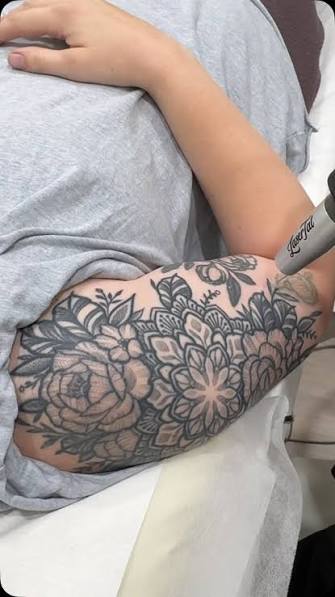
Tattoo blowout is when ink appears to spread beyond the intended edge of a tattoo, creating a soft, blurred or shadowed look. It can be disappointing, especially when the tattoo is fresh and you are still getting used to how it looks. The first step is not to panic or start comparing it with photographs online. A new tattoo needs time to heal before anyone can judge the settled result.
We assess each tattoo on its own. A blurred area may be a true blowout, temporary swelling, scabbing, ink residue or a change that becomes clearer as the skin recovers. Our tattoo artists in Adelaide can look at the work and explain what is happening before discussing any next step.
What does tattoo blowout look like?
Blowout usually appears as ink that has moved outside the intended line. It may look like a grey haze, a fuzzy border or a small shadow beside the design. The amount can vary from barely noticeable to more obvious, depending on the placement, line weight, colour and how the skin healed.
A fresh tattoo can look less tidy for other reasons. Redness and swelling can make edges look wider, while plasma, ointment and dried fluid can sit over the surface. Peeling can also change the contrast temporarily. Do not make a final decision while the tattoo is still recovering.
If you are unsure, take a clear photograph in natural light and ask the original studio for guidance. Avoid picking at the area or applying products that were not recommended for your aftercare.
Why can a tattoo blow out?
Ink needs to be placed at the correct depth in the skin. If it is placed too deeply, it can spread into surrounding tissue. Pressure, skin type, placement, needle choice and the artist’s technique can all affect how a line settles.
Some parts of the body are more difficult to tattoo neatly because the skin is thin, mobile or regularly exposed to friction. Hands, fingers and feet also experience frequent washing and movement, which can make healing and long-term appearance less predictable. That does not mean blowout is inevitable in those areas. It means placement deserves an honest conversation before the stencil is applied.
Design matters too. Very fine lines placed close together leave little visual space if the edges soften. A slightly larger design or more open composition may give the tattoo a better chance of staying readable over time.
Is tattoo blowout the same as fading?
No. Fading means the colour or pigment becomes less intense over time. Blowout refers to ink spreading beyond the intended line. A tattoo can fade without blowing out, and a tattoo can have a small blowout while the rest of its colour remains strong.
Sun exposure, healing, placement and everyday wear can affect both appearance and longevity. Once a tattoo is fully healed, sensible sun protection can reduce avoidable fading. Fresh tattoo care should follow the instructions from the artist who completed the work.
What should you do if you think you have a blowout?
First, follow the aftercare instructions and allow the tattoo to heal. Do not scrub the area, scratch it or ask several people to diagnose it from a fresh photograph. If the skin is increasingly painful, hot, swollen or producing discharge, contact the tattoo studio and seek appropriate health advice rather than treating that as a cosmetic issue.
Once the tattoo has settled, send the artist a clear photograph or arrange an assessment. We can discuss whether the issue is a true blowout, a healing change or something else that needs attention. A tattoo completed elsewhere should be assessed before another artist promises a correction.
Can a tattoo blowout be fixed?
Sometimes the appearance can be softened or balanced, but there is no single correction that works for every tattoo. A touch-up may strengthen parts of the design, adjust contrast or add elements that make a blurred edge less noticeable. It cannot simply remove ink from the skin.
The best option depends on the size and location of the blowout, the darkness of the surrounding tattoo, how the skin has healed and what result you want. Our touch-up and colour correction service can be discussed after an artist has seen the work.
In some cases, a new design may need to be larger or use stronger shapes. If the existing tattoo is dark or dense, a cover-up assessment may be more realistic than a fine-line correction. We will tell you honestly what appears workable and what does not.
Can tattoo blowout be prevented?
No artist can remove every variable from tattooing, but good planning helps. Choose an artist whose portfolio includes the style and placement you are considering. Ask how the design should be sized, what the placement is likely to involve and how the lines may change as the tattoo settles.
Avoid copying a design at a size that leaves no room around its details. A reference image on a phone does not show how the same amount of information behaves on real skin. We may recommend more space, a different placement or a simpler version of the idea. That is part of designing the tattoo, not a refusal to create it.
After the appointment, follow the studio’s care instructions. Keep the area clean, avoid picking and protect the healed tattoo from unnecessary sun exposure. If anything seems unusual, ask the studio rather than improvising.
When should you book an assessment?
Book an assessment when the tattoo has healed and the blurred area still concerns you, or when you want advice about an older tattoo before changing it. Bring clear photographs, the date it was completed, the placement and any information you have about the original work.
There is no need to feel embarrassed about asking. We welcome first-timers and people with decades of tattoo experience, and we will explain the options without judgement. Start with our tattoo enquiry form and tell us whether you are asking about a touch-up, colour correction or possible cover-up.
Frequently asked questions
1. Does tattoo blowout disappear after healing?
Some fresh blurring comes from swelling or surface residue and improves as the tattoo heals. True ink spread usually does not disappear completely, so arrange an assessment if it remains noticeable after recovery.
2. Is tattoo blowout the artist’s fault?
It is not useful to decide that from a fresh tattoo or photograph. Skin, placement, design and technique all affect how ink settles. An experienced artist should assess the healed work before discussing what may be possible.
3. Can you tattoo over a blowout?
Sometimes. The design, darkness and location determine whether a touch-up or cover-up is sensible. We need to see the tattoo before recommending an approach.
4. How long should I wait before a touch-up?
Wait until the tattoo has fully healed and ask the artist for guidance. The timing varies with the tattoo and the person’s healing process.
5. Does tattoo blowout mean the tattoo will fade?
No. Blowout and fading are different changes, although placement, sun exposure and healing can affect the overall appearance of a tattoo.
6. Can fine line tattoos blow out?
Any tattoo can change, including fine line work. Because fine line designs rely on narrow marks and small spaces, a blurred edge may be more noticeable.
7. Can a cover-up hide tattoo blowout?
A cover-up may help in some cases, but it normally needs enough scale, contrast and structure. An artist must assess the existing tattoo first.
8. How do I contact Art n Soul?
Use our contact form with photographs, the tattoo’s placement and a short description of your concern. We can then advise on the next step.