
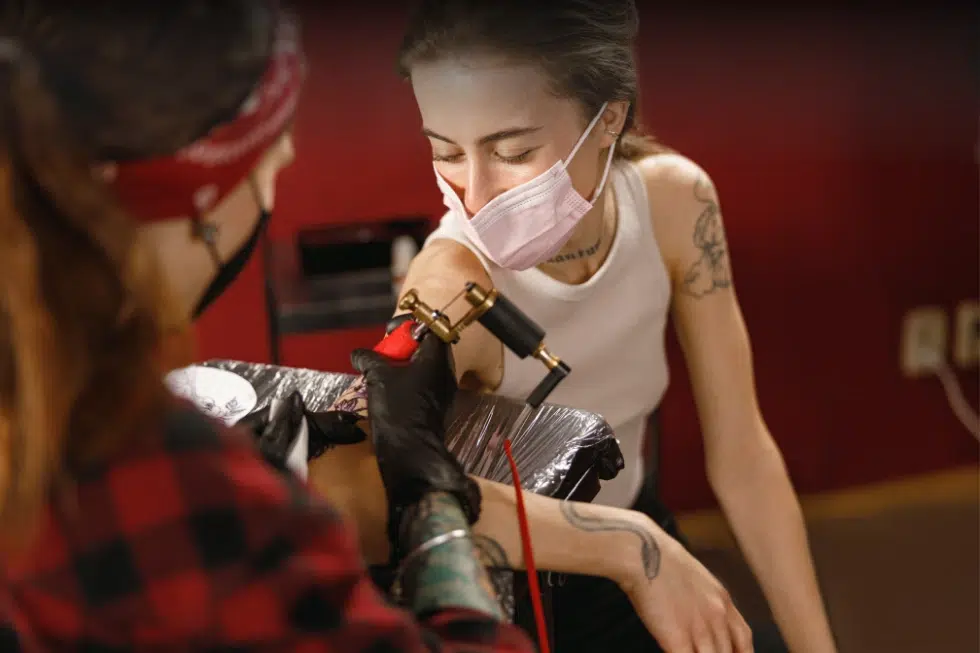
So you’ve finally done it. You sat through the session, trusted your tattoo artist, and walked out with a fresh cover-up over old ink you were ready to leave behind. Now comes the part that actually determines how good it looks long-term: the healing process.
And here’s the thing, most people don’t realise, cover-up tattoo aftercare is not the same as looking after a brand new tattoo on fresh skin. The tattooing process has already happened once on that spot. The skin remembers. That means the healing experience can look and feel different, and knowing what to expect puts you ahead of the game.
About 1 in 5 Australians (19%) has at least one tattoo, with nearly 1 in 4 women tattooed, according to Expert market research, so it’s safe to say we’ve become pretty comfortable with the process. But a cover-up is a different beast, and proper aftercare is what protects your investment.
This guide is specifically about what’s different when you’re healing a cover-up. If you’re in Prospect or anywhere across Adelaide and want to make sure your new piece heals the way it deserves, keep reading.
Why Cover-Up Tattoos Heal Differently: Important Considerations for Your Skin
Previously treated areas contain existing ink particles at different densities. Heavy saturation zones require more intensive needlework during the cover-up procedure, and more intensive work means different healing experiences. fame
In plain terms, your tattoo artist has had to work harder on that skin. To suppress an old design, they need to use heavier saturation, darker ink, and more needle passes than they would on a blank canvas. That means more trauma to the skin in a single session, and the healing process reflects that.
A few things that make cover-up tattoo healing unique:
- Heavily saturated ink takes longer to settle, particularly where the old tattoo was darkest.
- Many artists do cover-ups in stages, which means your aftercare routine may need to be repeated across multiple sessions.
- The tattooed area has already been through one round of needlework, so the skin may be slightly thicker or have minor scar tissue from the original piece.
- The artist needs to pack ink densely to achieve the necessary saturation for coverage, and sessions can be longer than you’re used to for a piece of that size.
If your artist has recommended coming back for a second pass, that’s completely normal. It’s part of getting the best result, not a sign that anything went wrong.
What to Expect from Your New Ink
The first two days after a cover-up are when things can look a little confronting if you’re not prepared. Here’s what’s normal:
- More pronounced redness, swelling, and weeping than you might have experienced with a standard tattoo
- The tattooed area may feel warmer and more tender than expected
- Blood and plasma seeping from the wound are completely normal; it’s your body doing its job
- The bandage or wrap over the tattoo may fill with fluid faster than you’re used to
None of this means something went wrong. It means your skin is responding to more intensive work.
Wrap and bandage guidance:
Your artist will have applied either a traditional cling bandage or a breathable second skin (adhesive bandage like Saniderm or similar). Follow their aftercare instructions closely, not a friend’s advice, not something you read on Reddit.
Some studios now use a transparent second skin bandage, which can stay on for up to 24 hours. Follow your artist’s guidance on this.
When it’s time to remove the wrap, here’s how to do it right:
- Wash your hands first
- Gently peel the bandage away under warm running water if it’s sticking
- Wash the tattoo gently with fragrance-free, unscented soap and lukewarm water, then pat dry with a clean paper towel
- Pat it dry, don’t rub
- Let air circulate before applying anything
Do not touch, pick, or inspect the tattoo excessively in those first 48 hours. Leave it alone as much as possible.
Moisturising a Cover-Up Tattoo: Getting It Right
One area where cover-ups require different care is moisturising. Because the skin underneath has already healed once and now has layers of old and new ink, the surface can dry and peel unevenly. This is normal and not a cause for panic.
What to use:
| Product type | Cover-up recommendation |
| Fragrance-free lotion | Yes, apply in thin layers |
| Unscented ointment (e.g. Aquaphor) | Yes, a thin layer of Aquaphor is a trusted choice |
| Bepanthen or petroleum jelly | Check with your artist first |
| Scented lotions or Lubriderm with fragrance | No, avoid entirely |
Apply a thin layer of fragrance-free moisturizer. Keep the tattoo clean and dry, but do not let it dry out completely.
Artists often recommend applying a thin layer of lotion 2 to 3 times a day, not more. Over-moisturizing is a real problem; it can pull ink and cause patchiness, which is the last thing you want on a cover-up where every bit of saturation counts.
What to do if peeling looks uneven:
Cover-up tattoos often peel in an uneven, patchy way, especially where the old design was heaviest. This is not necessarily a problem. Apply a thin layer of ointment or lotion, don’t pick at it, and let the skin heal at its own pace. If you’re worried, contact the studio rather than guessing.
Sun, Water, and Activity: Environmental Factors During Cover-Up Healing
Sun Exposure and UV Protection
Sun exposure during the healing phase is damaging for any tattoo, but cover-ups are particularly vulnerable. The ink is densely packed, and UV rays can cause heavier fading in the areas where new ink sits over old.
- Keep the tattooed area covered with loose clothing outdoors.
- Once healed, apply SPF (at least SPF 50+) every time you’re in the sun.
- UV exposure during healing is one of the most common reasons cover-up results disappoint long-term.
- Australia is a summer country, and the sun is usually shining and burning bright. When protecting your tattoo from the sun, the tattoo pigment buried in your skin has different protection needs than your rejuvenating skin does, as once pigment has been damaged, it cannot repair itself.
Submerging your Tattoo in Water
Submerging your tattoo in water is a hard no during healing. This includes:
- Oceans and beaches
- Baths and hot tubs
- Long showers where the tattooed area is soaked.
- Swimming pools (chlorine is particularly harsh on healing skin)
A quick shower is fine. Just don’t let the tattooed area sit under running water for long, and pat it dry with a clean paper towel immediately after.
Going to the Gym and Exercising
Excessive sweating irritates healing skin and can push ink out of a fresh tattoo. Avoid heavy gym sessions for at least two weeks. Light movement is fine, but protect the tattoo from friction (tight clothing rubbing against it is a quick way to damage your new ink).
Tattoo Healing Signs: What’s Normal vs What to Watch
Signs your cover-up is healing well:
- Gradual peeling that reduces over 1 to 2 weeks
- Redness fades after the first few days
- Ink beginning to settle and look more muted (this is normal and part of the process)
- Scab formation that naturally falls away without picking
Signs to watch for:
| Warning sign | What it might mean | What to do |
| Oozing or weeping past day 3 or 4 | Possible infection | Contact your tattoo artist or GP |
| Hot skin that doesn’t cool down | Infection risk | See a GP |
| Increasing redness spreading beyond the tattoo | Signs of infection | See a GP promptly |
| Unusual smell | Infection | See a GP |
| Push at the site | Infection | See a GP immediately |
| Streaking redness under the skin | Serious infection | Seek medical attention urgently |
If you’re unsure, contact Art n Soul directly. Don’t guess. The team has seen it all and can help you work out whether what you’re experiencing is part of normal healing or something that needs attention.
When Will You Know If Your Cover-Up Tattoo Worked?
This is the question everyone asks, and the honest answer is: not for a while.
As your tattoo heals, a new transparent layer of skin forms over the ink. This layer changes how light reflects off your tattoo, making the colors appear softer. With a cover-up, the old design can also appear to show through during the initial healing process, particularly as peeling and scabbing occur. In most cases, this settles significantly once the tattoo is fully healed.
Cover-up tattoo healing timeline at a glance:
| Phase | Timeframe | What to expect |
| Initial healing | Days 1 to 5 | Redness, swelling, plasma, bandage removal |
| Peeling and scab stage | Days 5 to 14 | Skin peels unevenly, itching is normal |
| Surface healed | Week 2 to 3 | The tattoo looks healed on the surface |
| Fully settle and assess | 4 to 8 weeks | Old design visibility fades, final result clearer |
The 4 to 8 week mark is when you can properly assess how the cover-up has performed. If anything still needs refinement, a touch-up appointment can address it. A well-executed touch-up can make a significant difference if any areas have healed patchily or if the old design is showing through more than expected.
If you’re thinking about a touch-up, talk to your artist at Art n Soul first. Sometimes what looks concerning at week three resolves beautifully by week six.
It’s also worth noting that cover-up tattoos sometimes require more than one session to get the result exactly right. Studios in Melbourne and across Australia commonly approach complex cover-ups in stages precisely for this reason. Your artist will let you know during your consultation whether this applies to your piece.
Aftercare Tips Summary: Take Care of Your New Tattoo
Here’s a quick-reference list for cover-up tattoo aftercare:
Do:
- Follow your artist’s aftercare instructions closely.
- Wash your tattoo gently 2 to 3 times a day with unscented soap.
- Pat it dry with a clean paper towel after washing.
- Apply a thin layer of Aquaphor or fragrance-free lotion as directed.
- Keep the tattooed area covered and protected from the sun.
- Wear loose, breathable clothing over the tattoo.
- Contact your studio if you’re unsure about anything.
Don’t:
- Pick, scratch, or peel scabs.
- Submerge your tattoo in water.
- Apply petroleum jelly, scented products, or Lubriderm with fragrance without checking first.
- Expose the tattoo to direct sunlight during healing.
- Go to the gym or do heavy exercise for at least two weeks.
- Over-moisturise (apply a small amount, not a thick layer)
Ready to Heal Your Cover-Up the Right Way?
A cover-up tattoo is a bigger investment than a standard piece, both in time in the chair and in the planning that goes into making it work. Proper aftercare is what protects that investment.
If you have any questions or concerns about how your cover-up is healing, don’t sit on it. Get in touch with the team at Art n Soul in Prospect directly. We’d rather hear from you early than have you second-guess your way through six weeks of healing.
You’ve already made the hard decision to transform your old ink. Now let the skin do its job.
Frequently Asked Questions
Q 1. How long does a cover-up tattoo take to heal?
A: Surface healing usually takes 2 to 3 weeks, but the full tattoo healing process, including deeper skin layers, can take 4 to 8 weeks for a cover-up. Heavily worked areas may take a little longer.
Q 2. Why does my old tattoo look visible through the new one during healing?
A: This is part of the tattoo healing process and happens because peeling skin creates contrast. In most cases, the old design becomes less visible once the tattoo is fully healed. If it’s still showing at 8 weeks, book a touch-up consultation.
Q 3. Can I use Aquaphor on a cover-up tattoo?
A: Yes. A thin layer of Aquaphor is a commonly recommended ointment for tattoo aftercare. Avoid applying a thick layer as it can trap moisture and slow healing.
Q 4. Is it normal for a cover-up to peel unevenly?
A: Yes, this is very common. Cover-up tattoos often have areas of heavier saturation that peel differently. As long as there are no signs of infection, uneven peeling is part of normal healing.
Q 5. When should I contact a GP instead of my tattoo shop?
A: If you notice pus, increasing redness spreading beyond the tattoo, hot skin that isn’t improving, or streaking redness under the skin, see a GP. These are signs of infection that require medical attention, not just aftercare adjustments.