
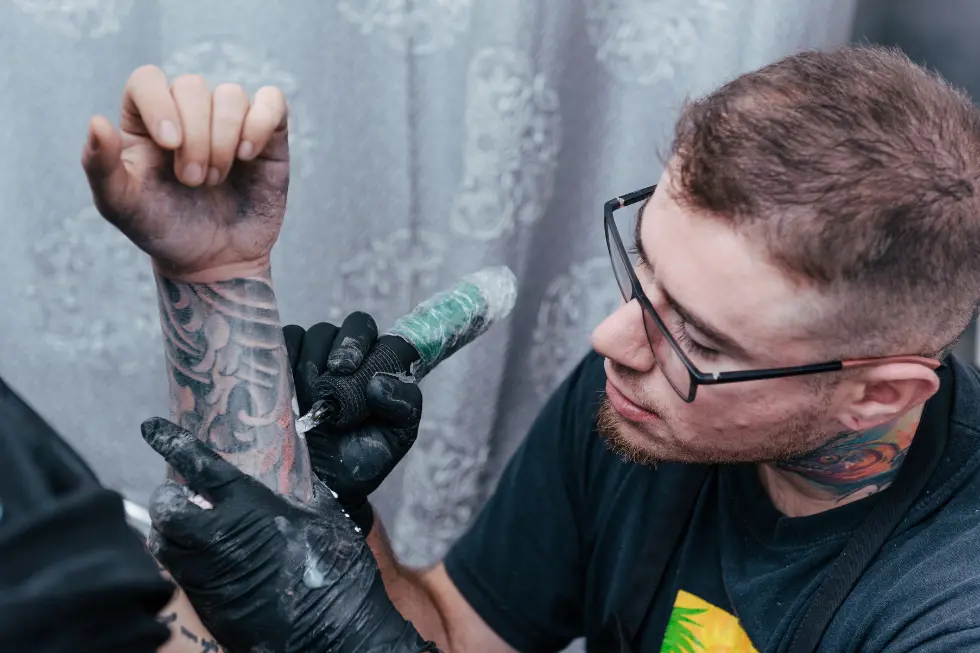
A cover-up tattoo typically takes 1.5 to 3 times longer than getting a regular tattoo of similar size. While a standard tattoo might take 2-4 hours, a cover-up can take 4-8 hours or more, depending on the old tattoo’s size, colour, and complexity. The tattooing process involves more layers of ink to conceal the old design, requiring extra time and skill from your tattoo artist.
Why Cover-Up Tattoos Take Longer Than New Tattoos
Here’s the thing: when you’re getting a cover-up, your tattoo artist isn’t working on a blank canvas. They’re trying to mask the original tattoo, which means dealing with existing ink that’s already embedded in your skin.
According to the Australian Tattoo Industry Association, approximately 23% of Australians with tattoos have considered getting a cover-up or removal, showing just how common unwanted tattoos are (Australian Tattoo Industry Report 2024).
The cover-up process is more challenging because:
- Darker ink is needed to conceal the old tattoo
- Multiple layers are required to ensure the old design doesn’t show through
- Strategic placement of the new design must completely hide the previous tattoo
- Colour corrections are necessary to neutralise old ink
- More detailed work is needed to create a new piece that’s big enough to cover the existing tattoo
A skilled tattoo artist needs to carefully plan how the new artwork will transform your old tattoo into something you’ll actually love wearing.
Understanding the Cover-Up Tattoo Timeline
The time it takes for a tattoo cover-up depends on several factors. Let’s break down what affects how long you’ll be in the chair.
1. Size and Complexity of Your Old Tattoo
A small, faded tattoo is much easier to work with than a large, dark tribal tattoo. If you’ve got a line tattoo or something that’s already quite light, your cover-up artist won’t need as much time compared to covering up a bold, black ink tattoo.
Research from the University of Sydney’s Dermatology Department found that darker tattoos require an average of 40% more ink and time to cover effectively (Sydney Dermatology Research 2024).
2. The New Tattoo Design
Your new piece needs to be thoughtfully designed. The new tattoo must be larger and often darker than the original design to properly conceal the old one. This means more surface area to cover and more detailed tattoo work.
Some cover-up designs work better than others:
- Floral patterns with lots of shading can hide difficult-to-cover areas
- Animal designs with natural dark and light contrast work well
- Geometric patterns can strategically incorporate the old tattoo into the new design
- Landscape scenes provide flexibility for covering larger tattoos
3. Your Tattoo Artist’s Experience with Cover-Up Work
Not every tattoo artist specialises in transforming unwanted tattoos. A cover-up artist has specific skills in colour theory, design adaptation, and layering techniques. Sydney tattoo artists who focus on cover-up work typically charge premium rates because the skill level required is higher than standard tattoos.
The Cover-Up Process: What Actually Happens
When you’re considering a tattoo cover-up, here’s what you can expect during the actual sessions.
1. Initial Consultation for Your Cover-Up Tattoo
Before any ink touches your skin, you’ll need a proper consultation. Your tattoo artist will:
- Examine your existing tattoo and discuss what could cover it
- Take photos and measurements
- Sketch potential cover-up design ideas
- Explain that realistic expectations for the cover-up can give you
- Discuss whether laser tattoo removal sessions might help first
This consultation usually takes 30-60 minutes and is crucial for a successful tattoo cover-up.
2. The Actual Tattooing Sessions
Here’s where the time difference really shows. A regular tattoo of, say, 15cm x 15cm might take 3-4 hours. The same size cover-up tattoo could easily take 6-8 hours, often split across multiple sessions.
Why does it take so much longer?
- Building up ink layers: The tattoo artist may need to go over the same area multiple times to ensure the old tattoo doesn’t peek through
- Working around the original tattoo: Every cover-up requires careful planning to conceal the old tattoo completely
- Colour blending: Creating new colour schemes that neutralise the old ink takes precision
- Strategic shading: Your experienced tattoo artist will use darker shades and heavier coverage in certain spots
Your tattoo artist’s skill in covering up an old tattoo will determine how many sessions you need. Some cover-ups are done in one go, while others might need 2-3 sessions spaced weeks apart.
Cover Up Tattoos vs Regular Tattoos: What’s the Difference?
Let’s get into the nitty-gritty of how getting a cover-up differs from getting a new tattoo:
1. Time Investment
Aspect |
Regular Tattoo |
Cover-Up Tattoo |
| Small design (5-10cm) |
1-2 hours |
2-4 hours |
| Medium design (10-20cm) |
3-5 hours |
5-10 hours |
| Large design (20cm+) |
6-12 hours |
12-24+ hours |
| Sessions needed |
Usually 1-2 |
Often 2-4 |
2. Pain Level of a Cover-Up Tattoo
Let’s be honest – tattoos hurt. But is a cover-up more painful than a new piece of art?
Generally, yes. Here’s why:
- The tattoo artist needs to work more intensively over the same area
- Multiple passes mean the skin gets more irritated
- Scar tissue from the old tattoo can be more sensitive
- Denser ink application creates more discomfort
That said, the pain level of a cover-up tattoo isn’t unbearable. Most people describe it as similar to a regular tattoo, just lasting longer.
3. Healing Process for Cover-Up Work
The healing process for a tattoo cover-up is pretty similar to a new tattoo, but there are some differences:
Week 1-2:
- More oozing and plasma discharge due to heavier ink saturation
- The area might feel warmer than a standard tattoo
- Proper tattoo aftercare is absolutely critical
Week 3-4:
- The new design starts settling in
- You’ll see how well the old one is actually covered
- Some minor touch-ups might be needed
Week 6-8:
- Your tattoo heals completely
- Final assessment of whether any additional tattoo work is needed
When Laser Tattoo Removal Makes Sense Before Getting a Cover-Up
Sometimes, an embarrassing tattoo is just too dark or complex for a straight cover-up. That’s where laser removal comes in handy.
1. How Laser Removal Helps the Cover-Up Process
Laser tattoo removal doesn’t have to completely remove your unwanted tattoo. Even 2-3 laser tattoo removal sessions can fade the old ink enough to make the cover-up work much easier.
Benefits of partial laser removal before a cover-up:
- Your new tattoo design doesn’t need to be as large
- Less ink is required, meaning shorter sessions
- More design flexibility for your tattoo artist for a cover-up
- Better final results with less show-through
The downside? You’re adding extra time and cost to your tattoo journey. Most people need 2-6 laser removal sessions spaced 6-8 weeks apart before their cover-up process can begin.
Choosing the Right Tattoo Artist for Your Cover-Up Tattoo
Not all artists are created equal when it comes to covering up a tattoo. Here’s what to look for:
1. Experience with Tattoo Cover-Ups Specifically
Ask potential artists:
- How many cover-up tattoos have they done?
- Can they show you before/after photos?
- Do they specialise in the style you want?
- What’s their success rate with challenging pieces to cover?
2. Portfolio Review
A good cover-up artist will have plenty of examples showing:
- Old tattoo vs new piece comparisons
- Various cover-up design styles
- Work on different skin tones and tattoo ages
At Art n Soul, our Sydney tattoo artists have extensive experience in transforming old tattoos into stunning new designs that you’ll actually be proud to show off.
What Makes a Successful Tattoo Cover-Up
Not every tattoo can be covered equally well. Here’s what you need to know.
1. Tattoos That Are Easier to Cover
Some tattoos are naturally easier for your tattoo artist to work with:
- Faded tattoo work – age has already lightened the ink
- Simple line work – less dense ink to mask
- Lighter colours – easier to cover than solid black
- Smaller designs – more options for the new design
2. Tattoos That Are Difficult to Cover
These present more challenges:
- Solid black tribal tattoos – require very dark new ink
- Fresh, bold work – the ink is still vibrant and harder to conceal
- Large pieces – need an even larger tattoo to cover them
- Previous cover-ups – you’re working with multiple layers already
The Cover-Up Can Give You a Fresh Start
Here’s some good news – a tattoo cover-up is a fantastic way to reclaim your skin and turn an old mistake into new artwork you’ll love.
Planning Your Cover-Up Design
Work closely with your tattoo artist to:
- Discuss your vision – what style appeals to you?
- Review placement options – can the new piece extend beyond the old one?
- Choose colours wisely – darker doesn’t always mean black
- Consider the story – make your new piece meaningful
Realistic Timeline Expectations
For most people considering a tattoo cover-up, here’s a realistic timeline:
- Consultation: 1 hour
- Design process: 1-2 weeks
- First session: 4-8 hours (or split into multiple appointments)
- Healing: 6-8 weeks
- Touch-up session (if needed): 1-3 hours
- Final healing: 4-6 weeks
Total time from consultation to fully healed new ink? Usually, 3-6 months, depending on the complexity of covering up an old tattoo.
Cost Considerations: Cover-Up Tattoo vs New Tattoo
We won’t quote specific prices (they vary heaps depending on artist and design), but understand this: cover-up work costs more than regular tattoos because:
- More time in the chair
- Higher skill level required
- More ink was used to mask the original tattoo
- Often, multiple sessions are needed
Budget for a cover-up to cost anywhere from 50-200% more than a comparable new tattoo would cost. It’s worth it to ensure the old tattoo is properly concealed.
Tattoo Aftercare for Your Cover-Up
Taking care of your new ink is crucial, especially with a cover-up where more ink has been deposited into your skin.
First 2 Weeks – Critical Care Period
Your tattoo artist will give specific instructions, but generally:
- Keep it clean and moisturised
- Avoid soaking (no swimming or long baths)
- Don’t pick at scabs or peeling skin
- Wear loose clothing over the area
- Stay out of direct sunlight
Long-Term Care
To keep your tattoo looking fresh:
- Always use sunscreen on the tattooed area
- Moisturise regularly
- Stay hydrated
- Book touch-ups when needed (usually every 5-10 years)
Proper tattoo care ensures your new design stays vibrant and the old design stays hidden.
Ready to Transform Your Old Tattoo Into a New Masterpiece?
If you’re considering a tattoo cover-up, don’t settle for just any artist. The difference between a mediocre cover-up and a brilliant one comes down to skill and experience. At Art n Soul, our team specialises in transforming unwanted tattoos into stunning new pieces that you’ll be proud to wear. We’ll take the time to understand your vision, assess your existing tattoo and discuss realistic options that work for your skin, lifestyle, and budget.
Book your free cover-up consultation today and take the first step toward turning that old regret into beautiful new artwork. Every tattoo tells a story – let us help you write a better one. Don’t let an unwanted tattoo hold you back any longer. Getting a tattoo cover-up could be exactly what you need to feel confident in your skin again. Let’s create something amazing together.
Frequently Asked questions
How painful is a cover-up tattoo compared to a new tattoo?
Cover-ups are generally slightly more painful because they require heavier ink saturation and multiple passes over the same area. Most people rate it 1-2 points higher on a pain scale, but it’s totally manageable.
Can any tattoo be covered up?
Most can, but very dark, large, or fresh tattoos may need laser fading first. Your consultation will determine if a direct cover-up works or if laser removal sessions would help.
How long should I wait between laser removal and getting a cover-up?
Wait at least 6-8 weeks after your last laser session to let your skin fully heal before starting the cover-up tattoo.
Will my old tattoo show through eventually?
Not if done properly by a skilled artist. A well-executed cover-up should permanently conceal your old ink, though fading over decades might require touch-ups.
How many sessions does a typical cover-up take?
Most cover-ups need 1-3 sessions, depending on size and complexity. Small pieces might be done in one sitting, while larger work could take multiple appointments.